Meetings in Orléans with the International Federation for Sports Officials and in Paris with the UNESCO Intergovernmental Committee for Physical Education and Sport illustrate FISU’s commitment to contributing to international dialogue beyond university competitions.
The first half of June 2026 marked an important period of international engagement for FISU in France, with participation in two significant events related to the future of sport, education and governance: the International Federation for Sports Officials (IFSO) International Event and General Assembly in Orléans, followed by the UNESCO Intergovernmental Committee for Physical Education and Sport (CIGEPS) meeting in Paris.
Building the future of officiating in Orléans
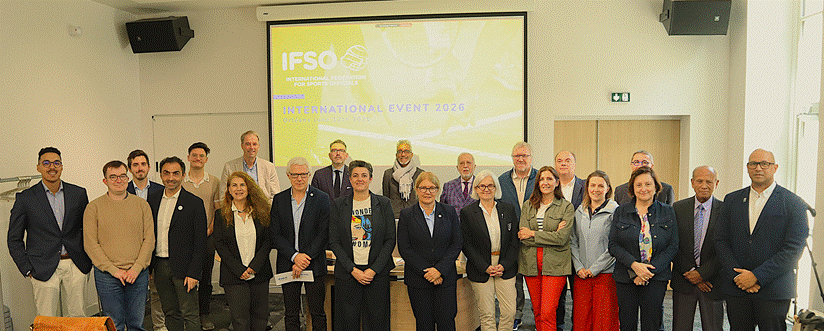
On 12 June, Fernando Parente, FISU Deputy Secretary General and Chief Development Officer, represented FISU at the IFSO International Event 2026 – “Building the Future of Officiating” and General Assembly in Orléans, France. FISU is a member of IFSO and actively supports initiatives aimed at strengthening the role of referees and sports officials worldwide.
The event brought together international experts, sports leaders, academics and representatives of officiating organisations to discuss three key themes shaping the future of refereeing and umpiring: gender equality, inclusion and diversity, and psychology and performance.
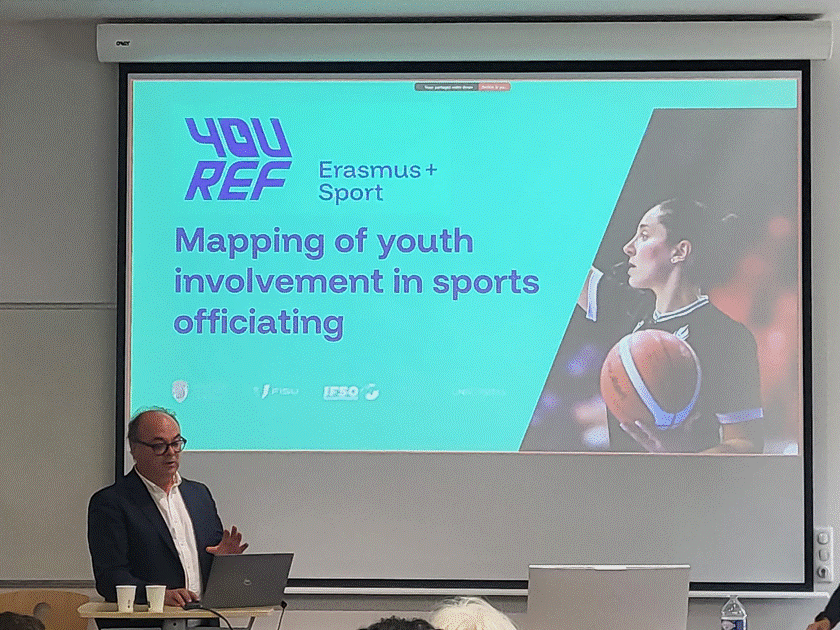
During the session on “Psychology & Performance in Officiating”, Fernando Parente presented the Erasmus+ YouREF project (EU Easmus+ Initiative YouRef – Inspiring and Retaining Young Sports Officials across Europe), highlighting the challenges and opportunities associated with recruiting, developing and retaining young referees and officials.
Based on research involving more than 500 young referees from 21 countries, the project demonstrated the importance of mentoring, recognition, a sense of belonging and clear development pathways for ensuring long-term engagement.
The discussions concluded with a strong consensus that the future sustainability of sport depends not only on athletes and coaches, but also on attracting, supporting and retaining the next generation of referees and umpires. Universities and educational institutions were specifically identified as important environments for future recruitment and development.
FISU at UNESCO Headquarters in Paris
Fernando Parente also represented FISU at the Ordinary Session of the UNESCO Intergovernmental Committee for Physical Education and Sport (CIGEPS), held at UNESCO Headquarters in Paris. As a UNESCO Consultative Member, FISU continues to contribute to international discussions on sport policies and physical education.
Gohar Nabil (second from left), Egypt’s Minister of Youth and Sports, was elected as the new Chairperson of CIGEPS, taking over from FASU President, Dr Sobhy Ashraf. His appointment further strengthens the links between the global university sport movement and UNESCO’s sport policy agenda.
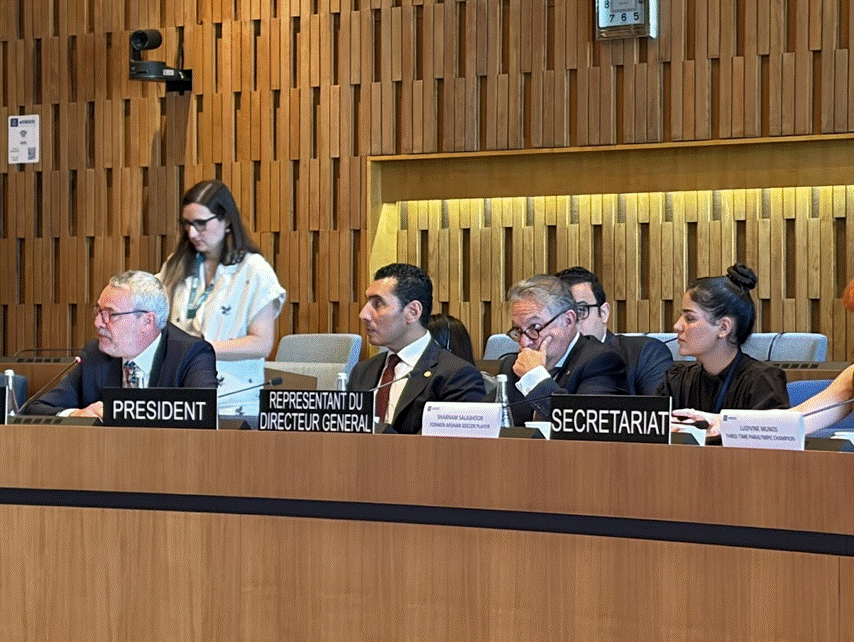
The meeting focused on UNESCO’s ongoing work to promote inclusive, equitable and safe sport and physical education worldwide. Discussions centred on the development of the Global Policy Standards for Inclusive, Equitable and Safe Sport and Physical Education, an ambitious framework being prepared for endorsement at the 8th International Conference of Ministers and Senior Officials Responsible for Physical Education and Sport (MINEPS VIII) in 2027. These standards aim to help governments align policies, investments and accountability mechanisms to ensure that sport systems uphold the rights, dignity and safety of all individuals.
Two priorities: Safe Sport and Disability Inclusion
Participants also reviewed the first Global Sport Policy Survey, designed to establish international baselines for sport governance and policy development, and received updates on the Fit for Life Digital Dashboard, UNESCO’s new tool for monitoring progress in sport, physical activity and wellbeing.
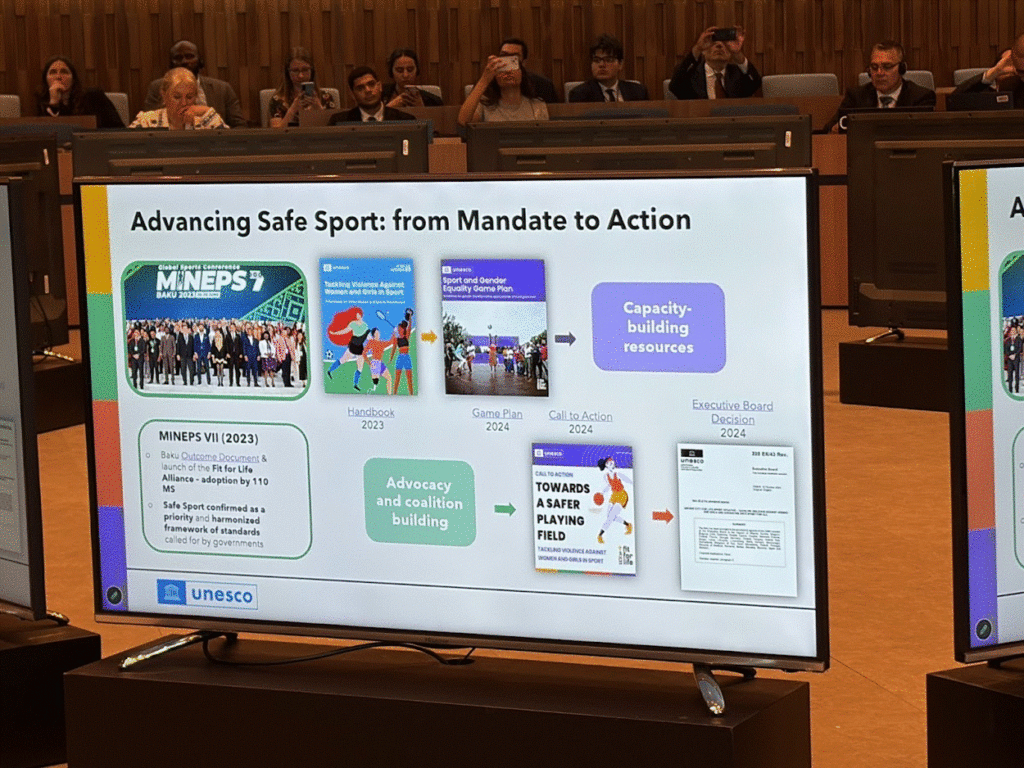
Special attention was given to two priority areas: Safe Sport and Disability Inclusion. Discussions highlighted the need for stronger prevention mechanisms against violence in sport, improved reporting systems, and greater inclusion of people with disabilities through the implementation of the Santiago Roadmap for Inclusive Sport and Education.
The Committee also received updates on the reform process of the International Convention against Doping in Sport, aimed at improving its effectiveness, governance and long-term sustainability.
A major outcome of the meeting was the adoption of Resolution CIGEPS/2026/3, which welcomes the progress made in developing the Global Policy Standards, encourages Member States and partners to participate actively in their implementation and testing, and reinforces international cooperation to advance more inclusive, equitable and safe sport and physical education policies worldwide.
Advancing FISU’s strategic objectives
Together, the meetings in Orléans and Paris illustrate FISU’s commitment to contributing to international dialogue beyond university competitions. Whether through the development of future sports officials, participation in UNESCO’s global sport policy agenda, or the promotion of inclusion, education and wellbeing, FISU continues to strengthen its role as a leading international organisation at the intersection of sport and higher education.
The close alignment between initiatives such as Erasmus+ YouREF, the FISU Healthy Campus Programme and UNESCO’s Fit for Life agenda also highlights new opportunities for collaboration in supporting healthier, safer and more inclusive environments for young people worldwide.
Related News
An exciting celebration of African University Sport
“The most important fight for university sport is not fought on the pitch, but in the meeting where the strategic plan is signed off.”
Local student-athlete Wissal Yakhlef offers Qatar a perfect finale with three golds