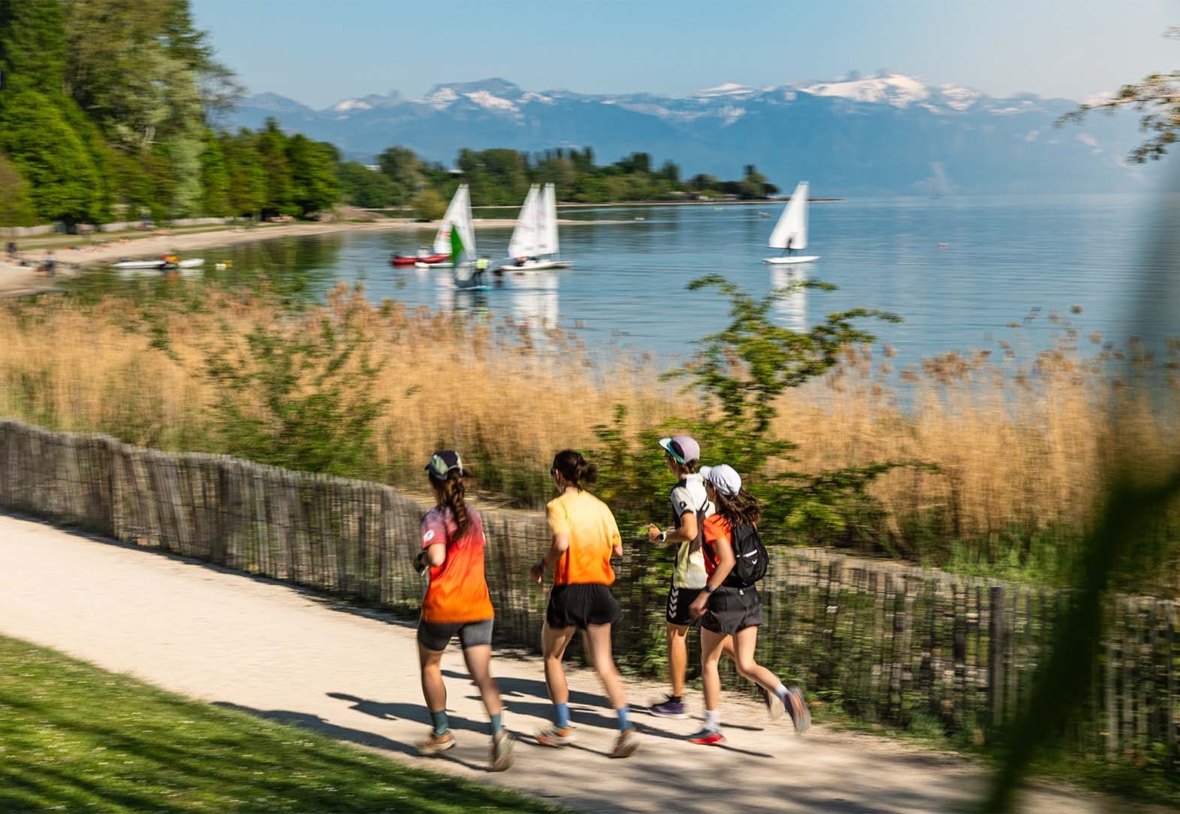

The new cohort of FISU Student Ambassadors met online over two days for extensive training and for a deep dive into the world of university sport. Former Student Ambassador Karolína Cepkova from Slovakia sums up the first day.
For the opening session of the 2026 FISU Student Ambassadors training, screens lit up across the globe. Some ambassadors logged in with the morning sun, some in the middle of the afternoon, and others sat in the quiet glow of their monitors at 1:00 AM. That single detail, choosing a midnight training session over sleep, tells you everything you need to know about the passion driving this new cohort.
Sitting in the corner of the room on-site at FISU Headquarters in Lausanne, Switzerland, watching programme coordinator Albina Rakhmatullina expertly moderate the session, I was suddenly transported back in time. Years ago, I watched that exact same FSA screen from the quiet of my shared student house. My hair was tied up in my favorite brown hair clip, and just out of frame, my roommate was blasting Madonna´s “4 Minutes”, chanting “If you feel it, you already got it”, trying to hype herself up for an exam.
The short distance a dorm room and international university sports
Back then, I was just staring at the screen, wondering who the people behind the cameras were. I had no idea that clicking “join” from that dorm room would eventually lead me through two ambassadors’ terms, a team leader position, and into future collaboration with FISU’s Media and Communications team. The distance between a dorm room and the heart of international university sports is much shorter than it appears.
For many logging on to this session, that distance still feels vast. “This FISU experience is new for a person like me who is in his first year of career,” admitted Derek Mejias from Costa Rica. “Certainly, I don’t know what to expect, but at the same time, I believe this experience will help me know people from around the world.”
That initial uncertainty is a universal FSA rite of passage. But the ice broke quickly. During the cultural segment of the programme, the current team leaders introduced a short sign language exercise. Suddenly, dozens of young leaders across the world were on screen, silently but enthusiastically signing words like “FISU”, “friend”, “international university sport”, and “volunteer”. It was a quiet moment that spoke volumes about the community being built here.
Asking the hard questions
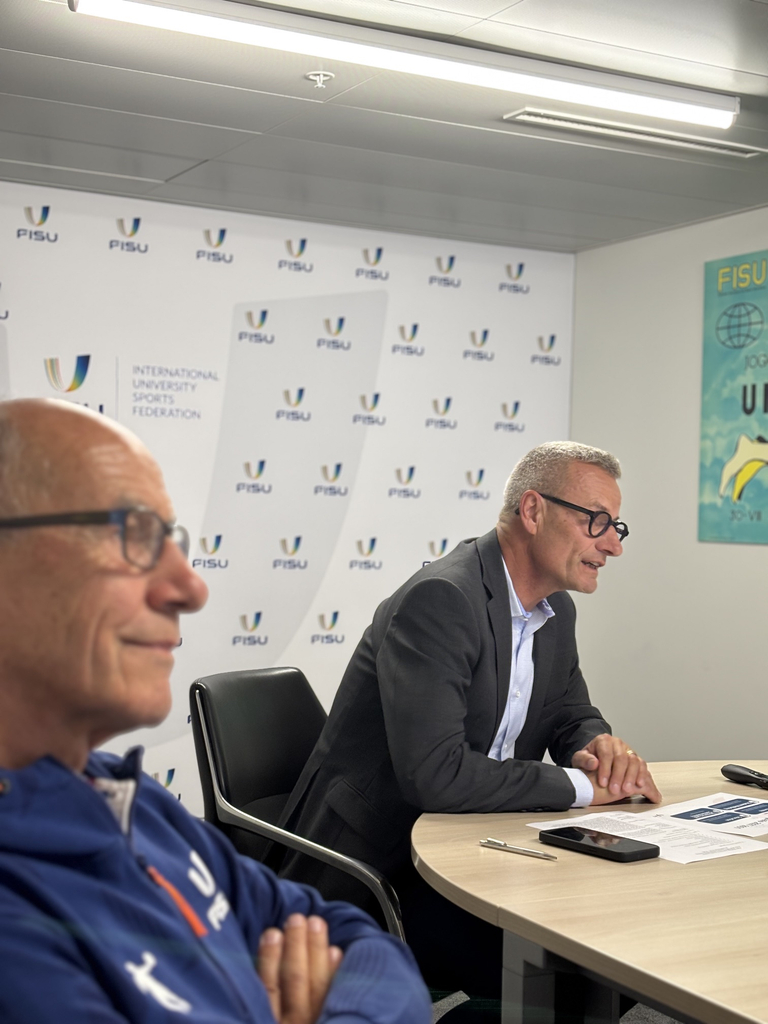
When it was time to engage with the speakers, namely FISU President Leonz Eder and FISU CEO and Secretary General Matthias Remund, the 2026 cohort proved they are here to challenge the status quo.
Joshi Ritz from Nepal did not shy away from the realities of global inequality, asking FISU Secretary General and CEO how the organisation can support countries lacking the resources to participate in international events. Remund pointed to the FISU Step-Up Programme, designed specifically to bridge that gap.
The questions also revealed a cohort thinking far beyond the playing field. Yaren Şahin from Türkiye asked Matthias Remund if FISU plans to expand educational opportunities into sports diplomacy and international relations. The answer: an upcoming FISU Master´s programme aimed at equipping graduates to navigate the complex intersection of sports management and global governance, met the exact ambition of the room.
“What stood out to me today was how much potential university sport has to create opportunities beyond competition,” noted Azanathi Genu from South Africa. “As someone passionate about increasing opportunities for young women in sport, I’m excited to learn from students around the world and explore how we can use university sport to create greater participation, leadership, and belonging.”
Finding a voice and building a network
Even when facing local roadblocks, the ambassadors sought structural solutions. Lorenzo Gaggero from Argentina asked Marianela O´Mahony, FISU Communications Director how to promote university sports in faculties where it is underappreciated. O´Mahony answered that the best starting point is getting students familiar with FISU platforms. She also shared an upcoming communication network programme designed to teach young leaders how to write, report, spotlight, and conduct interviews effectively.
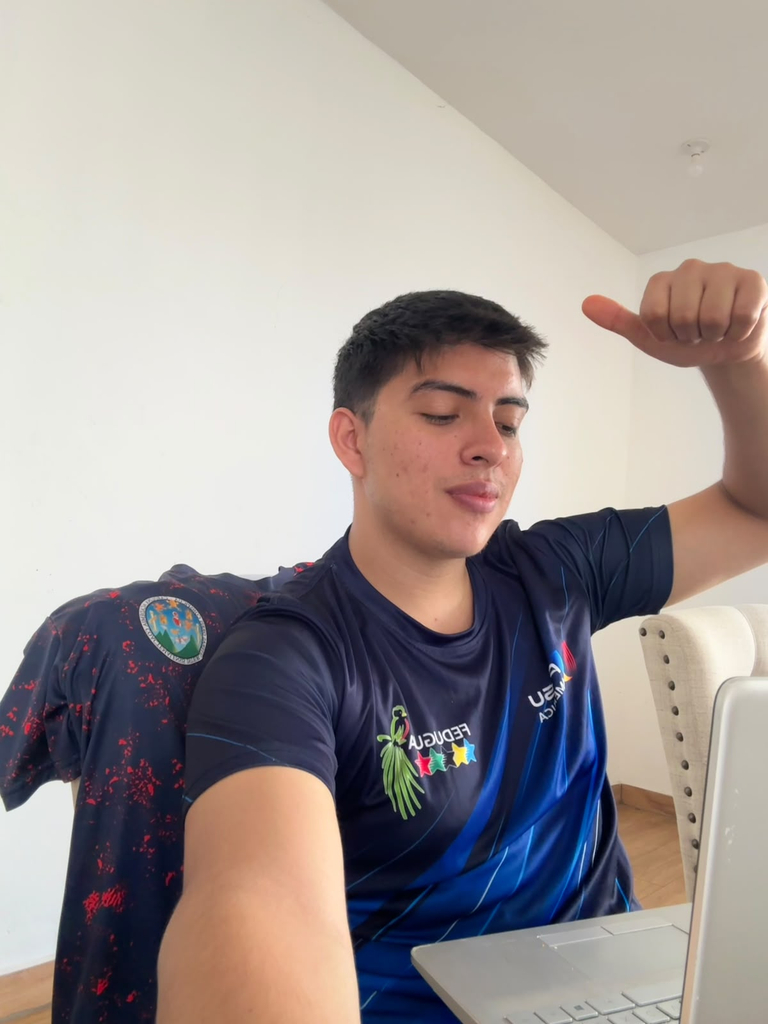
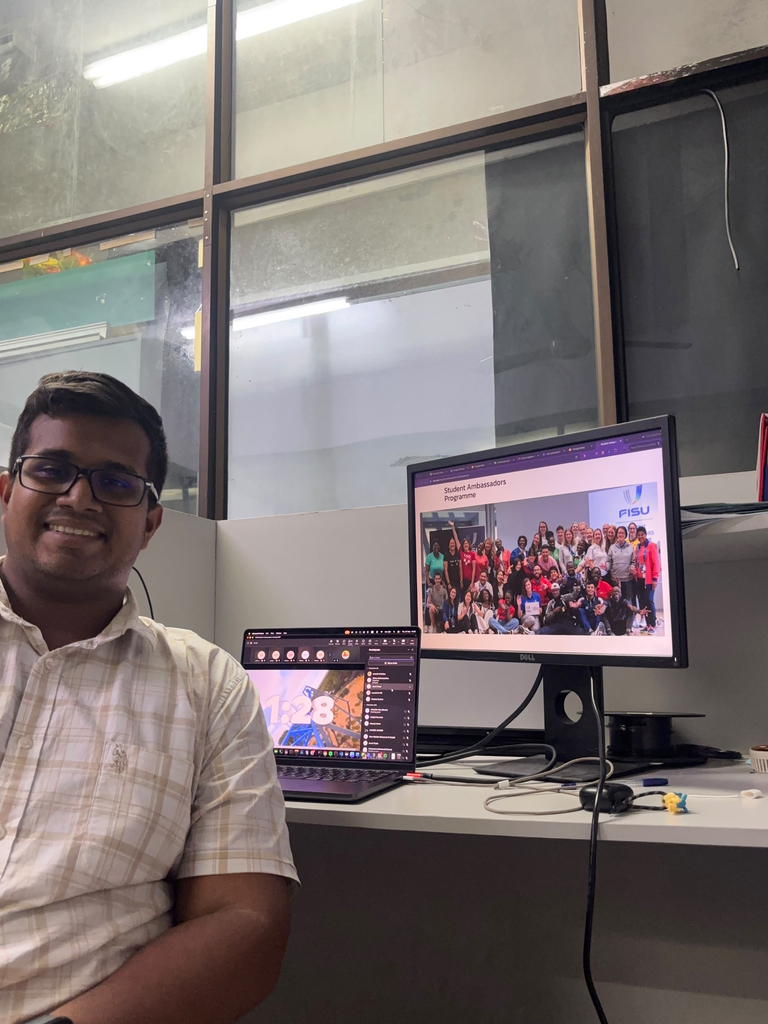

Equipping students with these tools transforms them from passive attendees into active global connectors. That sense of connection was the immediate takeaway for Fatma Belaroui, representing university sport in Algeria. “The FSA training was an inspiring and insightful experience,” she shared. “I found it exceptionally useful, and I truly enjoyed connecting with fellow ambassadors.”
Creating a space where those connections happen naturally requires intense behind-the-scenes work from the FISU staff, who sweat the smallest details so attendees experience a welcoming, seamless environment. But the real magic ultimately unfolds in the chat boxes, the questions, and the shared realisation of what is possible.
“It’s always amazing how sport inspires us to become better people, students, friends, and future leaders every day!” said Liljana Boshnakovska from Macedonia, capturing the underlying spirit of the day.
For others, the inspiration came from seeing what comes next. “The fact that most speakers were athletes before, and now they are where they are, gives me a strong belief in myself,” added Noel Bilauni from Kenya.
Whether you are logging in at 1:00 AM, hyping yourself up to Madonna in a student house, or asking the CEO a difficult question about resources, the message of the 2026 FSA session is clear: University sport is in capable, curious hands.
Written by Karolína Cepkova
Related News
Poland sees success in bridge while Germany controls the chess board as the FISU Championship Mind Sports concludes
The sharpest minds of world university sports meet in Liaocheng

EPFL will celebrate its Healthy Campus certification during its upcoming “Health Days”