On the second to last day of the Östersund 2026 FISU World Forum, the discussions and presentations evolved around governance and sports events. From student presence on campus to artificial intelligence, no stone was left unturned.
“University Sport Events: driving change through inclusivity and good governance” was the theme of the day. A vast one that was approached very differently by both keynote speakers.
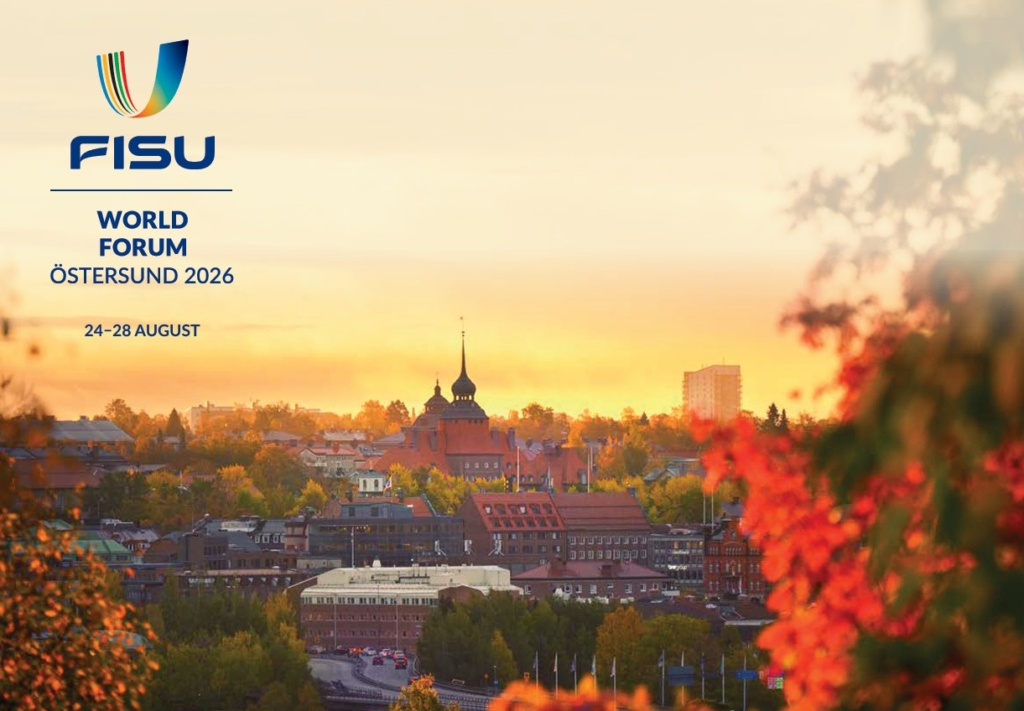
Johanna St Clair Rénard is a strategic leader working at the intersection of leadership, governance and organisational transformation in sport. She leads Bosön Education, the national leadership and education platform for Swedish sport, where she works closely with boards and executive teams across Sweden’s 72 national sport federations.
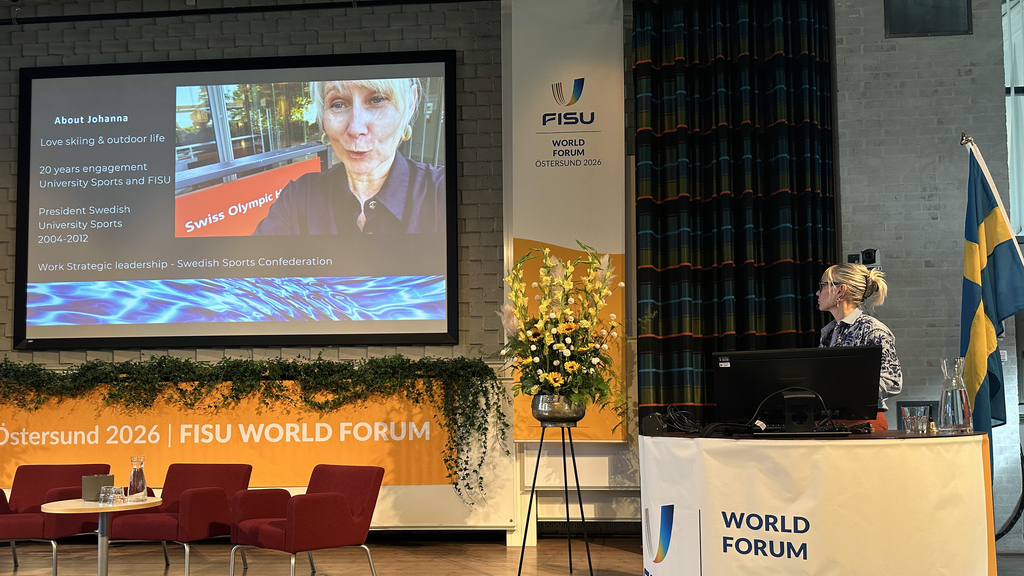
Johanna St Clair Rénard kicked off with a basic affirmation: “University Sport is often seen as something simple” and immediately followed up with a provocative yet inspiring second one: “but what if it is the most powerful tool to shape society?”
She then demonstrated her train of thought through three points: leadership, the power of university sports and changing the game.
She argued that university sports gives you multiple skills, like solving problems fast, it exposes you to many different situations often outside of your comfort zone.
And when she tackled “changing the game”, she spoke of her own inclusion example when her university sports federation paid for an extra person to accompany her so she could travel while still breastfeeding her daughter. “Inclusion is not a policy, it is action!”
AI depletes the capacities sport rebuilds
Hans Westerbeek is Professor of International Sport Business at Victoria University in Melbourne, Australia, where he leads the Sport Business Insights Group and serves as Director of PASI (Physical Activity and Sport Insights).
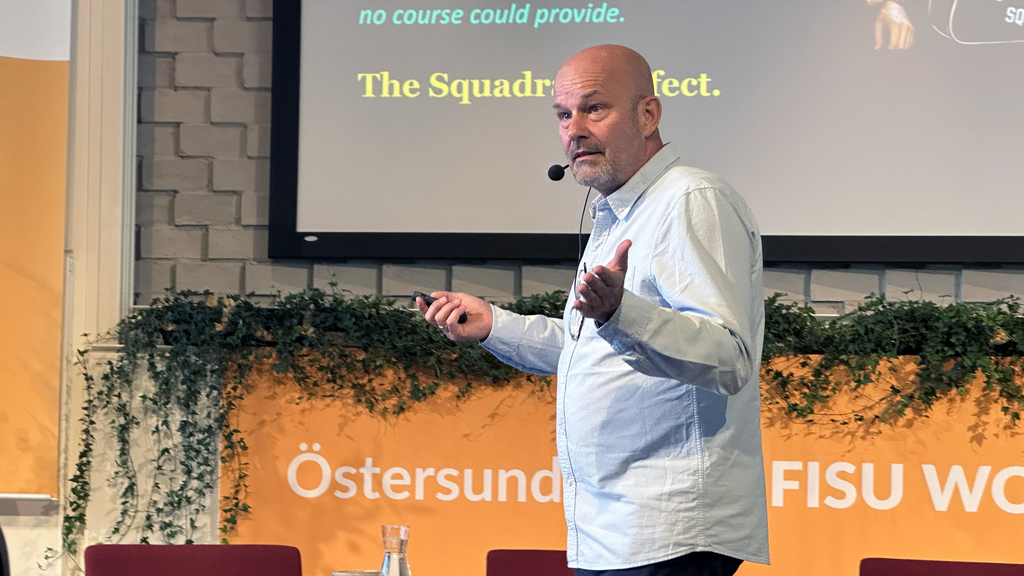
“I am the odd one out, the business and AI guy” joked Hans Westerbeek. He speaks fondly of his memories of university sport, when he practices futsal more for the social activity after the game – improvised meal, getting to know the new city he was in – than for the sport itself and then joined the squash club with whom he travelled to Paris and gained experiences he would never had had otherwise.
Around the question: “which students are we preparing our university sport for ?”, he spoke extensively about Artificial Intelligence. “AI is not a tool students pick up, it’s the water they swim in”.
Most of his students haven’t read a book from cover to cover in years. When giving them assignments, he says that of course they can give AI proper prompts or decide to use it as a sparring partner to challenge the result of the work they do without devices, only with their brains.
AI depletes the capacities sport rebuilds
AI dependence erodes sustained attention, critical thinking and effortful knowledge-making while sport restores attention and executive functions, cognitive resilience and friction, ambiguity and cognitive struggle.
And his advice to the International University Sports Federation is simple: “FISU must protect physical presence as the product – AI is the scaffolding, not the stage!”
students spend less time on campus
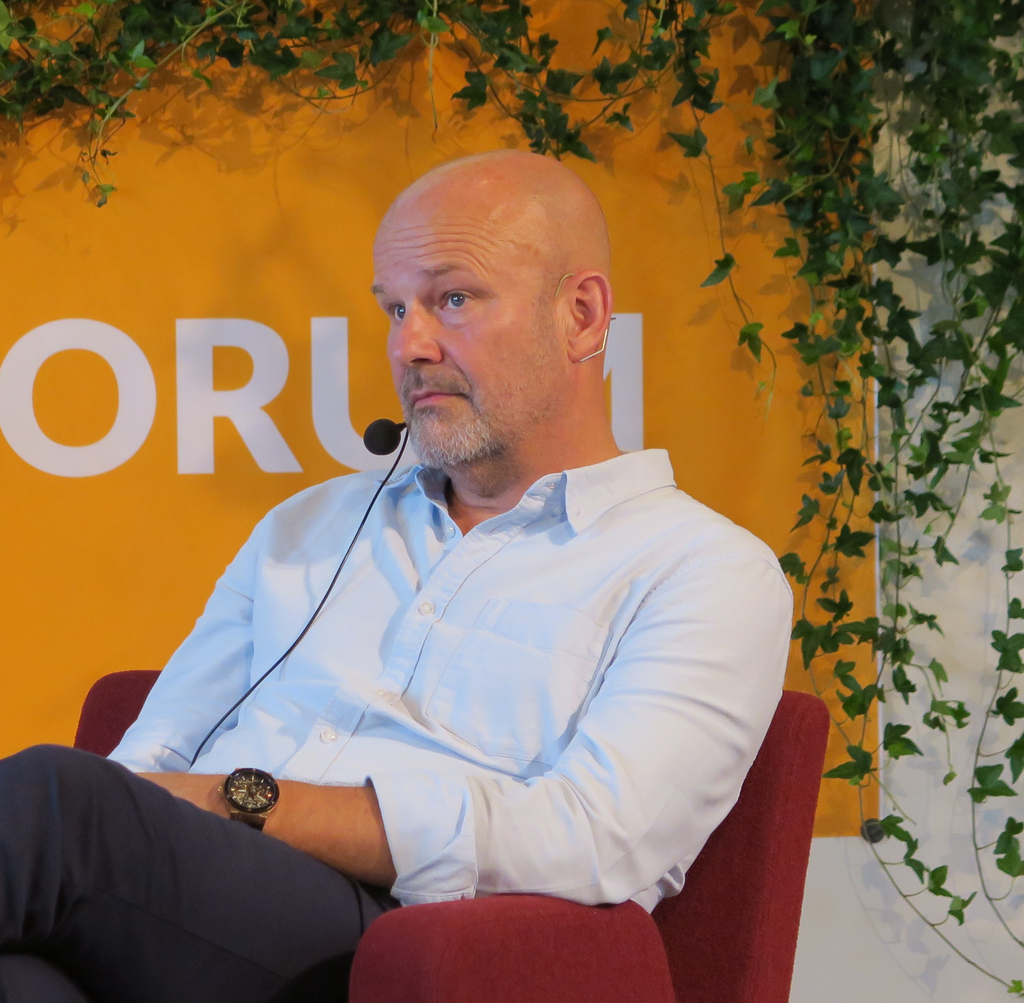
The two keynote speakers were joined by Mid Sweden University senior lecturer in tourism studies, specialising on event impacts Martin Wallstam for the panel discussion.
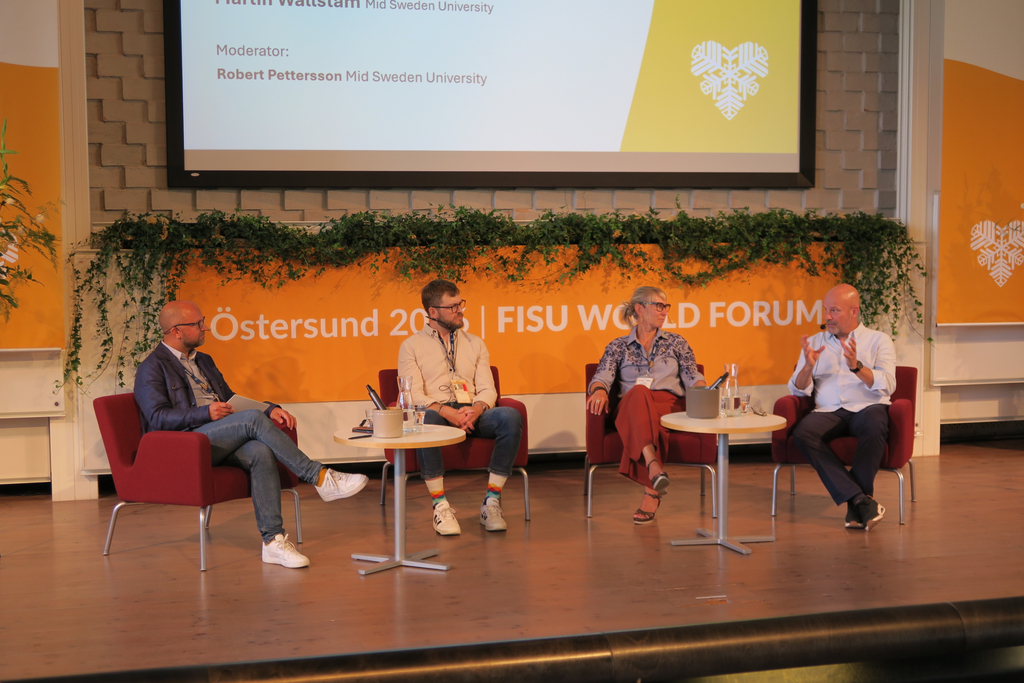
First of all, what is the definition of a sport event?
Martin: An sport event departs from a gathering of people, limited in time, with clear theme or programme and a producer and a user.
What are the main strengths and challenges that sport or university sports faces today?
Hans: Sport is so valuable but the digital revolution has made it even more valuable with an explosion of challenges, like gambling to pick just one example.
Johanna: The competition for time. Students need to study, in some countries work to support themselves and spend less and less time on campus. We want to make physical activity more attractive in order to count in the equation.
In his opening speech, FISU President Leonz Eder said it was not only about competition, but participating for experience and joy. Should these two aspects remain separate?
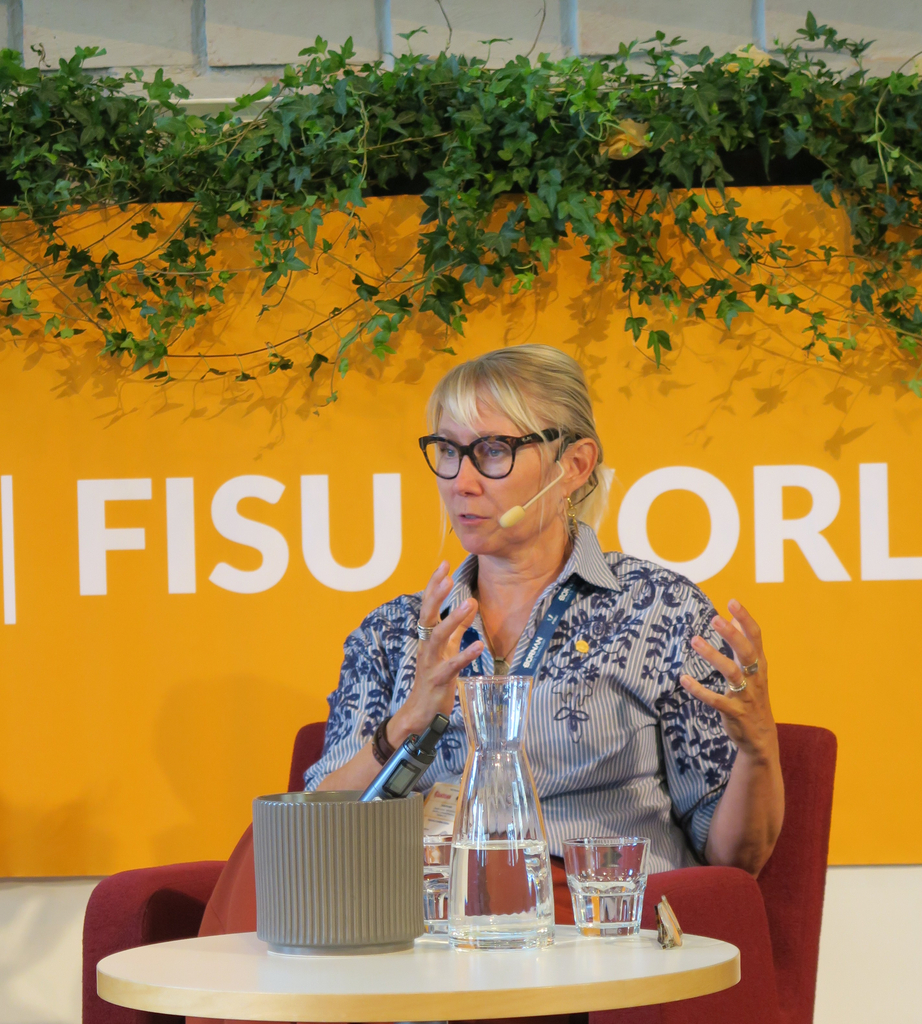
Johanna: I definitely thing these should be combined. University sports should be accessible to everyone. Usually, when it comes to FISU events, they are more focused on elite sports. But if you add Healthy Campus actors, the two can easily be combined.
Softer values of sport events, like social impact, are been talked about more and more…
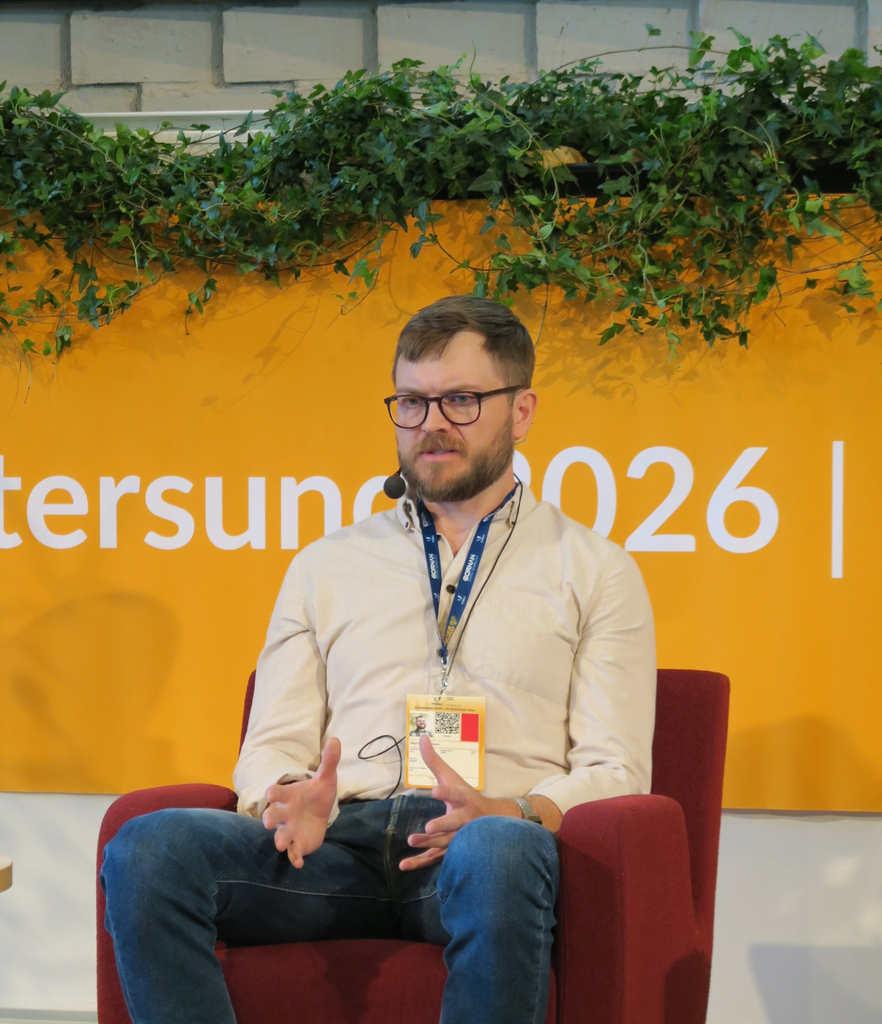
Martin: That is true, but social impacts are notoriously difficult to study because they are intangible. There is no universally recognised social impact. Two major categories are nevertheless being measured and they are sports participation and volunteerism. Like for example watching the Stockholm marathon and then being inspired to take up running.
Johanna: And speaking of volunteers, I would just like to mention this 71 year old man from Östersund who has learnt English especially to drive people from the station to their hotel during the Ötersund 2026 FISU World Forum!
Hans: The Sydney 2000 Olympic Games were marketed as Games which would have a trickle down effect: people watch sports and then take them up. But sadly this was short-lived.
Martin: I agree, that is why it is important to follow up with a next event!
Will there be more or less student sports events in five years from now?
Hans: I think there might be more, especially if they are smaller, more frequent, and bespoke to changing student demands. You might also have to take the event to the students. Flexibility is key here.
What would be your key message to the audience?
Johanna: Keep in contact with the people you have met here. These are potential open doors to go hiking, to organise events or even to do research together. So many people, so many opportunities!
Hans: As universities, think where you place your sports facilities on your campus. Make sure they are central and easily accessible. And a more general piece of advice: always keep asking questions!
Related News
The students take the stage and the future into their hands
“You are our inspiration”
“Dual Career is a human right”