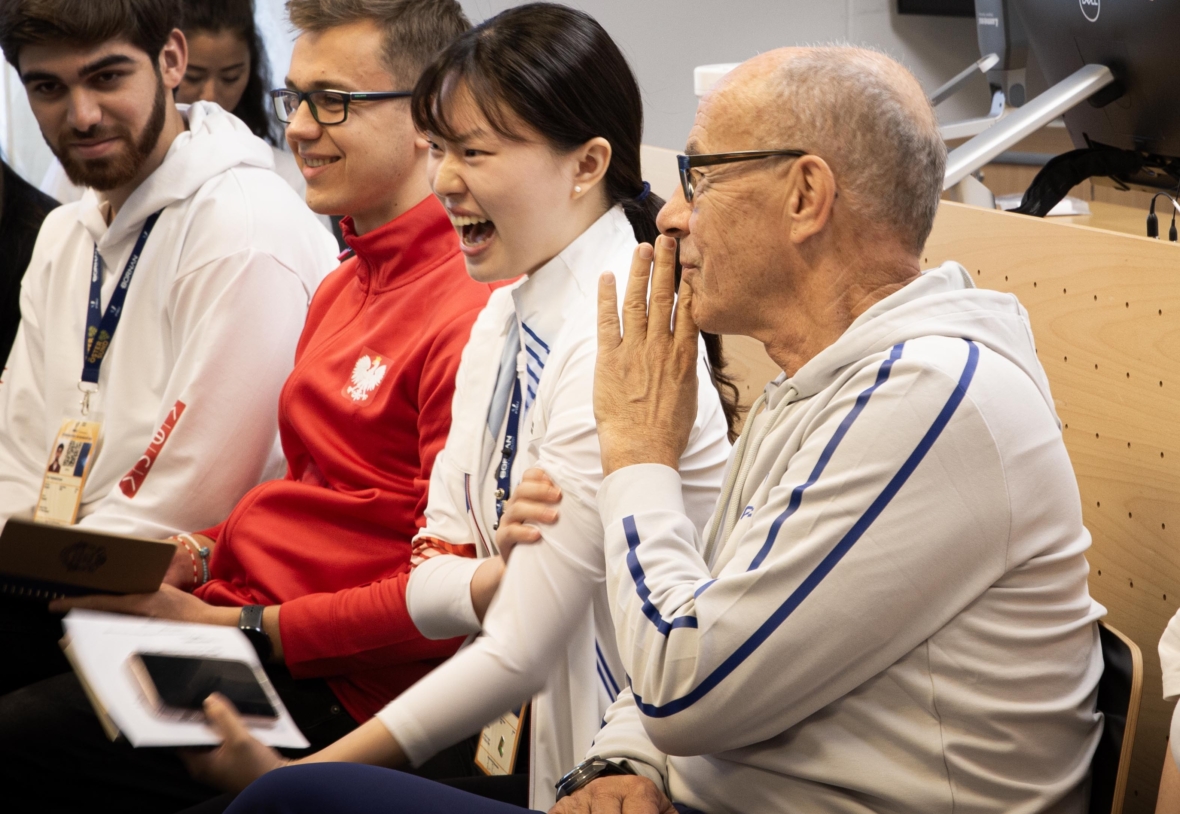

Over 150 participants from all five continents have gathered in Sweden to take part to the Östersund 2026 FISU World Forum. On the opening day, the focus was on healthy campuses as the key for wellbeing and excellence around the world.
The Östersund 2026 FISU World Forum kicked off by diving straight in to a subject that concerns all students and all universities around the globe: student wellbeing. This is increasingly important in today’s world and occupies an important place in the International World University Sports Federation (FISU) strategy.

One of the main programmes that FISU has launched to address this crucial topic is the FISU Healthy Campus. The Healthy Campus Label embeds health and wellbeing into all aspects of campus culture, improving student lifestyle.
Why should universities sign up?
- Learn best practices from major universities around the world
- Encourage cohesion and coordination among all departments and services
- Improve the image and credibility of the University with a certified international label
- Put a stop to “drop out” trends and help students love campus life
- Work towards United Nations Sustainable Development Goals in an organised manner and get into leading university rankings
As the FISU World Forum is the place where the future of university sport is shaped, representative from Platinum Certified Healthy Campus universities were invited to give a keynote speech or participate to a panel talk during this first day.
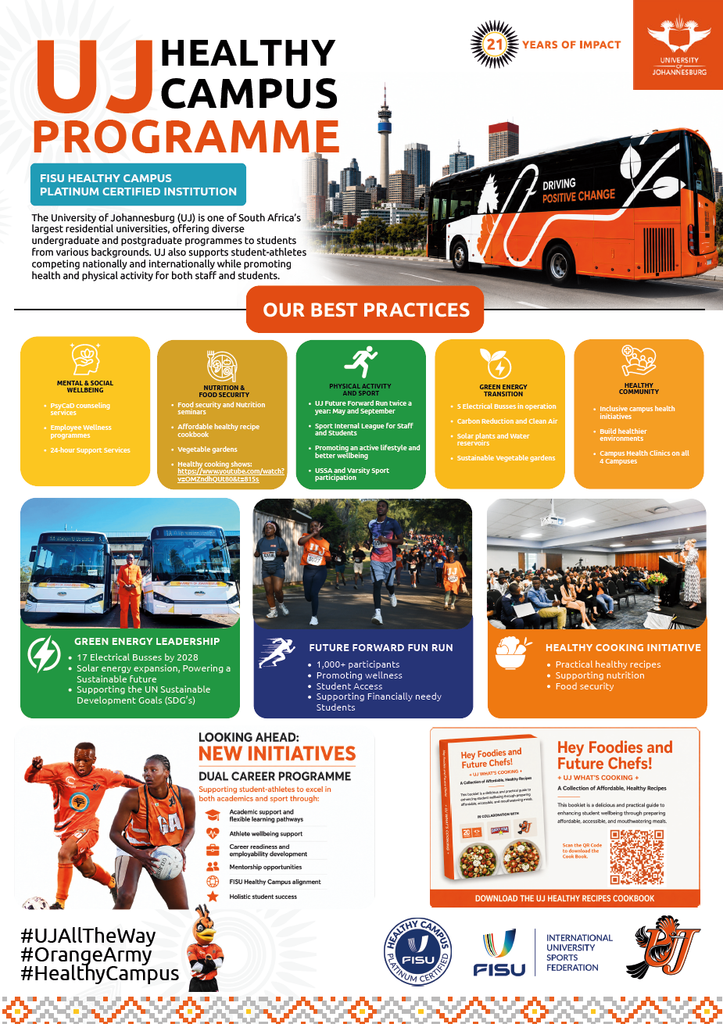
Other FISU Healthy Campus member universities provided posters about their work and will take part to many specific sessions in Sweden.
“We spend too much time rescuing people downstream”
Director of Sport and Physical Activity at Platinum Certified Healthy Campus Trinity College Dublin and Vice Chair of the FISU Gender Equality Committee, Michelle Tanner was the first keynote speaker to address a floor of attentive students and professionals.
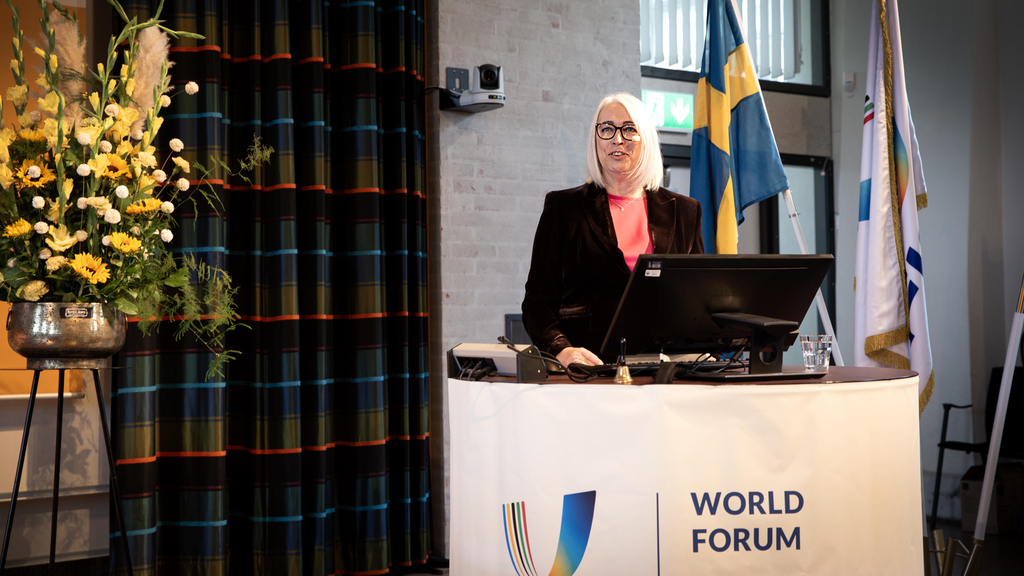
Titled “How do we create environments where people really can thrive?” her presentation was an eye-opening mix of hard truths – students stuffer from anxiety and loneliness, digital overload, physical inactivity and disconnection and the fact that universities spend too much time rescuing people downstream – and best practices like the inspiring “Mind Body Boost”, a 6-week programme for students to be able to look after themselves.
Brand new best practices collections
“At Trinity College, and it should be the case everywhere, Healthy Campus isn’t a department, it’s an ecosystem”, explains Michelle Tanner. “It is embedded in everything we do. “Mind Body Boost” is just one example of an effective programme, where we teach students mindfulness, stress management and we help them get endorphines from sports practice. It is a great way for international students to meet people and interact.”
Of course, there are many Healthy Campus best practices, which are shared every year. The 2026 version has just come out.
You can find the 2026 best practices on the official Healthy Campus page.
Key takeaways from the Healthy Campus Panel
Megan Skeels (University of Doha for Science and Technology), Marc Poulin (Calgary University) and Joakim Abrahamsson (Umeå University) are all from Platinum Certified universities. They come from Asia, America and Europe and still share very similar experiences and opinions with regards to the Healthy Campus Programme.
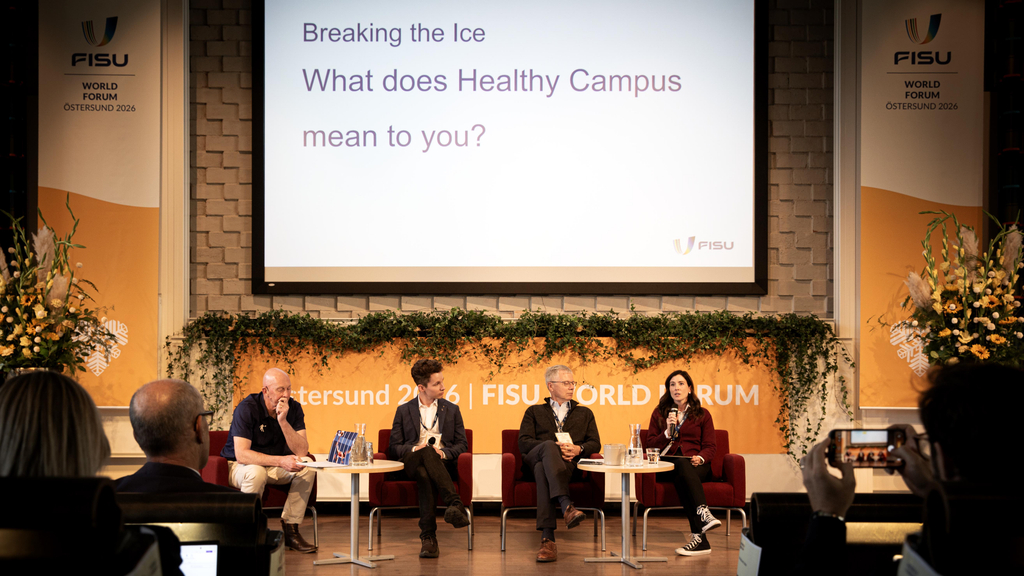
What does Healthy Campus mean to you?
- Joakim: “It is part of everything we do, not a side thing.”
- Marc: “I think of a thriving and inclusive community.”
- Megan: “It is supporting students holistically.”
Why does Healthy Campus matter?
- Joakim: “My personal departure point is that I am a clinical psychologist, so I am quite far downstream. I spend a lot of time doing face to face counselling. I believe it is essential to spend resources on good quality counselling and support much further upstream, because it would be super expensive to pay people like me to solve all problems down the line! So invest in promoting health rather than in fixing problems down the line.”
- Marc: “I do research in the field of how exercise influences brain health. And we now know that the more you are physically active when you are young, the more mentally active you will be when you get older.”
- Megan: “It is not likely challenges are happening in a silo. Through a multi-dimensional and holistic approach to wellness, we can understand how these dimensions are all connected and better understand where challenges are stemming from.”
What is the key ingredient that helped you reach platinum status?
- Joakim: “Finding ways of integrating those values into policies, whether new or existing. For us it was through sustainability, a subject that top management take very seriously.”
- Marc: “Collaboration! And the fact that at my university the programme was essentially driven by students. If they buy in, it will create lasting impact. Of course leadership also needs to support it fully.”
- Megan: “We are lucky that our President, Dr. Salem Al-Naemi, has integrated wellness into absolutely everything we do.”
Looking 10 years ahead… what do you believe will define a truly healthy campus?
- Joakim: “It should be immediately visible when you visit a campus, and not just included in the books as a policy. It should be apparent everywhere from the grounds to the classrooms.”
- Marc: “Some of the future challenges and opportunities will be influenced by AI and the management of digital platforms. But I hope it will have shifted from individual responsibility to institutional responsibility.”
- Megan: “It should be engrained in the culture at all levels and seen in our students when they graduate as thriving adults.”
Related News
The students take the stage and the future into their hands
“AI is not a tool students pick up, it’s the water they swim in”

“You are our inspiration”