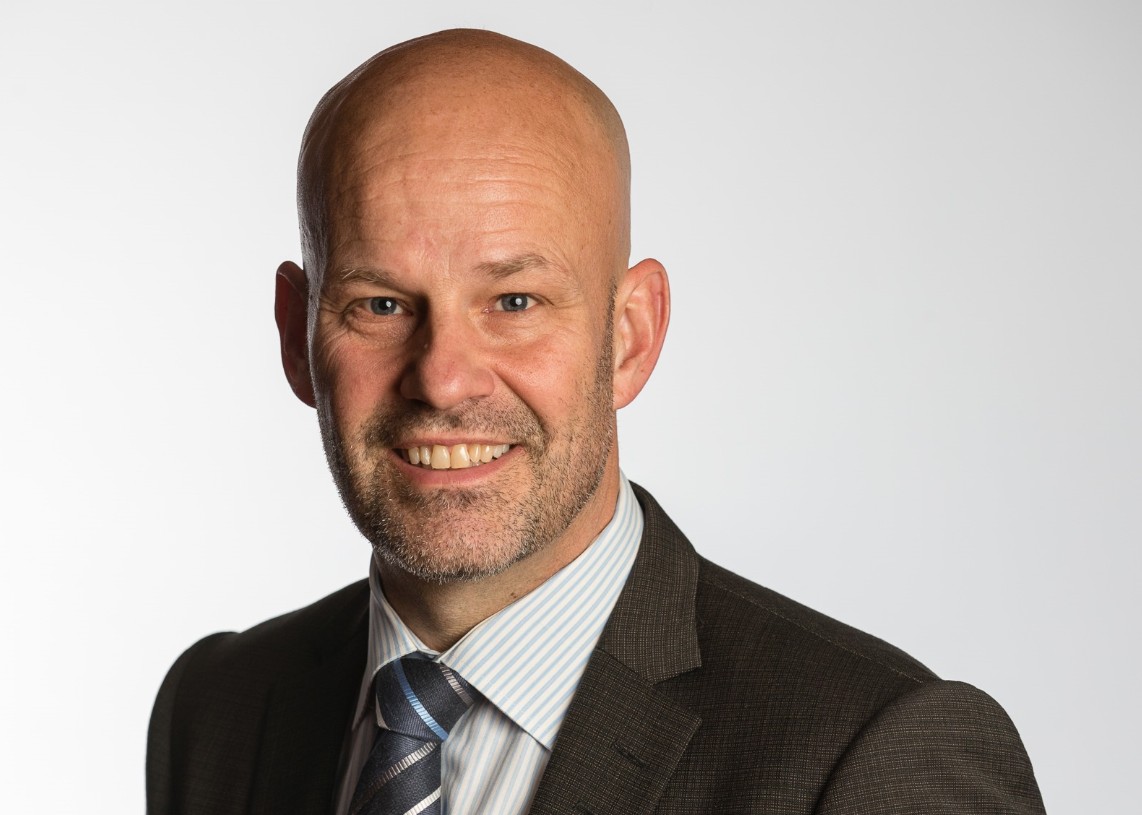
University sport should no longer be viewed simply as a way to keep students active. According to keynote speaker Hans Westerbeek, it is essential for students’ cognitive resilience, mental health and academic success. At the FISU World Forum 2026 in Östersund, he will challenge universities to rethink the role of sport in higher education.
Hans Westerbeek is Professor of International Sport Business at Victoria University in Melbourne, Australia, where he leads the Sport Business Insights Group and serves as Director of PASI (Physical Activity and Sport Insights). An internationally recognised professor, speaker and advisor, his work explores the intersection of strategy, innovation and the societal role of sport.
With experience across Australia, Europe and Asia, Westerbeek has worked with universities, governments and sport organisations on topics including sport management, event strategy, digital transformation and the future of sport. His research demonstrates how sport events create value far beyond competition by strengthening communities, encouraging participation and supporting broader social outcomes.
On 27 August at the FISU World Forum 2026, he will present a global perspective on the changing role of university sport and sport events, highlighting how institutions can protect the conditions that enable students to participate, connect and thrive in an increasingly digital world.
– What is the biggest challenge universities face today when it comes to promoting student health, wellbeing and physical activity?
– The biggest challenge is structural, not motivational. Students do not need to be convinced that sport is good for them. They need a campus day that makes sport possible. Right now, three forces are dismantling that campus day simultaneously.
First, commercialisation: universities are increasingly positioning themselves as credential vendors rather than formation institutions, and sport is treated as overhead rather than investment.
Second, the COVID legacy: hybrid and online delivery normalised campus absence, and universities never fully returned to the density of in-person engagement that made sport a natural part of student life.
Third, financial pressure: more than half of university students in several countries are now working during term time, in some cases nineteen hours a week. The student with a free Tuesday evening for training is becoming a minority.
Add AI as the fourth force — making remote study more viable, substituting social experience, and eroding the deep cognitive capacity that effortful, physical, social learning was always building — and you have a perfect storm. The challenge is not promotion. It is that the conditions for participation are being structurally removed.”
Physical activity versus AI
– Can you share an example of a university, organisation or initiative that is making a real difference and could inspire others around the world?
– The most inspiring examples I have encountered are not sport-specific programmes — they are institutions that have redesigned the campus day itself around student wellbeing as a non-negotiable outcome. Universities that have deliberately protected in-person teaching density, invested in campus social infrastructure, and created explicit dual-career frameworks for student-athletes are seeing the downstream effects in participation, retention, and mental health outcomes.
In the research space, the Healthy Minds Study in the United States is the most powerful evidence base for what is actually happening to students. It shows that sport participation is significantly associated with lower rates of loneliness and better mental health outcomes. That data is making it harder for university leaders to treat sport as extracurricular. The institutions that are using that evidence to make the cognitive and social health case to their vice-chancellors — not the sport case, but the institutional outcomes case — are the ones making real progress.
– What is the one key message you hope participants will take away from your keynote in Östersund?
– University sport was never separately justified — it was organic to campus life. It thrived because students were physically present, shared timetables, and lived proximate lives. That campus ecology is now under structural attack as I mentioned in my first answer. Campus life is the precondition for university sport, and university sport is the precondition for the cognitive and social health of your students. That is not a sport argument. That is a higher education argument — and it is time FISU owned it.
– If every participant could leave the Forum and make one change at their university, what would you like that change to be?
– Change the argument you make to university leadership. Stop arguing for sport. Start arguing for cognitive resilience.
My recent research in AI and Society shows that the 17 to 25 age group — students — now shows the highest AI dependence and the lowest critical thinking scores of any cohort studied. AI is not just a distraction. It is reshaping how young people construct knowledge, sustain attention, and tolerate cognitive difficulty. Physical activity is one of the most powerful evidence-based responses to this: a 2025 meta-analysis confirms significant improvements in attention, memory, and executive function from regular physical exercise in exactly this age group.
The change I want every participant to make is to walk back into their institution on Monday morning and reframe university sport not as a wellness program but as a cognitive health infrastructure. Sport builds the resilience AI is eroding. That argument — made in the language of student academic performance, retention, and graduate employability — is the one that gets sport off the overhead list and onto the investment agenda. One conversation, reframed, could change the institutional position of university sport entirely.
– What are you most looking forward to experiencing in Östersund and at the FISU World Forum?
– Östersund is a genuinely interesting choice of location for a forum about active bodies and healthy minds. Sweden has integrated physical activity into the design of everyday life in ways that most countries treat as aspirational rather than operational. Being in a city that embodies the argument — rather than just discussing it in a conference room — matters.
But most of all I am looking forward to the collision of perspectives. The global landscape of university sport is extraordinarily diverse: the commercial elite model of North America, the participation-first club culture of Europe, the intensity of Japan’s bukatsu system, the community-rooted traditions of Latin America, and the geography-constrained hybrid of Australia. These five systems face the same storm — campus erosion, AI, financial pressure on students — but with completely different vulnerability profiles and completely different resources to respond. A room full of people who are navigating that same challenge from radically different starting points is where the most useful thinking happens.
Related News
The students take the stage and the future into their hands
“AI is not a tool students pick up, it’s the water they swim in”
“You are our inspiration”