

While the crowds are busy cheering for the student-athletes crossing the finish line, there is an entirely different league of university students working hard behind the scenes. Let’s look at the work of the FISU Student Ambassadors season 2025/2026.
While these students are often the face of university spirit on their respective campuses, their collective influence has matured into something far more sophisticated than traditional volunteering. To understand the true reach of this “engine room,” it is helpful to look beyond the individual stories and examine the data from the 2025/26 season, as reported during the June 2026 educational session.
During that session, current FISU Student Ambassadors shared the progress on the action plan objectives that they carry out together with their national and continental university sports federations.
Operating on a global scale, the programme is currently driven by 126 ambassadors, comprising 53 men and 73 women, representing 92 different countries. This cohort has shifted the traditional role of a student volunteer toward a model where they function as professional sport administrators.
The system shakers
Leadership is not just a title, but the daily decision to create impact and solve real problems
When local sport structures face operational blind spots, these Ambassadors do not wait for solutions; they build them. In Nigeria and Uganda, student leaders are actively transforming how universities look after their players, both on the sidelines and within institutional frameworks.
Esther Anuoluwapo Kolawole (Nigeria)
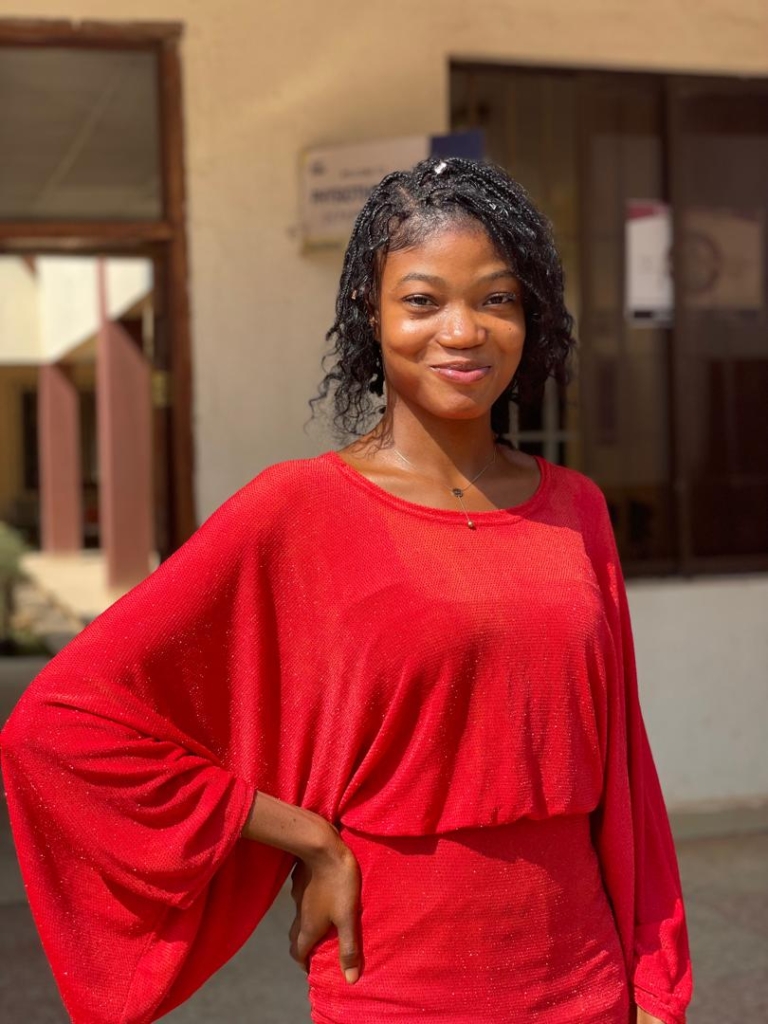
When Esther Anuoluwapo Kolawole noticed a gap in immediate athlete care at the University of Ilorin, she took actionstraight away.
Serving as the Chief Medical Officer of the Unilorin League, she launched the first-ever student-led Sports Medicine Team.
“One of my proudest moments has been seeing students from the University of Ilorin actively step into sports medicine and athlete care during sporting events, proving that there is space for young people to thrive in the sport industry beyond athletics alone.”
Her visionary initiative earned her a selection into the highly competitive FISU Springboard Programme, an opportunity she will use to challenge herself and deepen her impact even further
Stewart Agaba (Uganda)
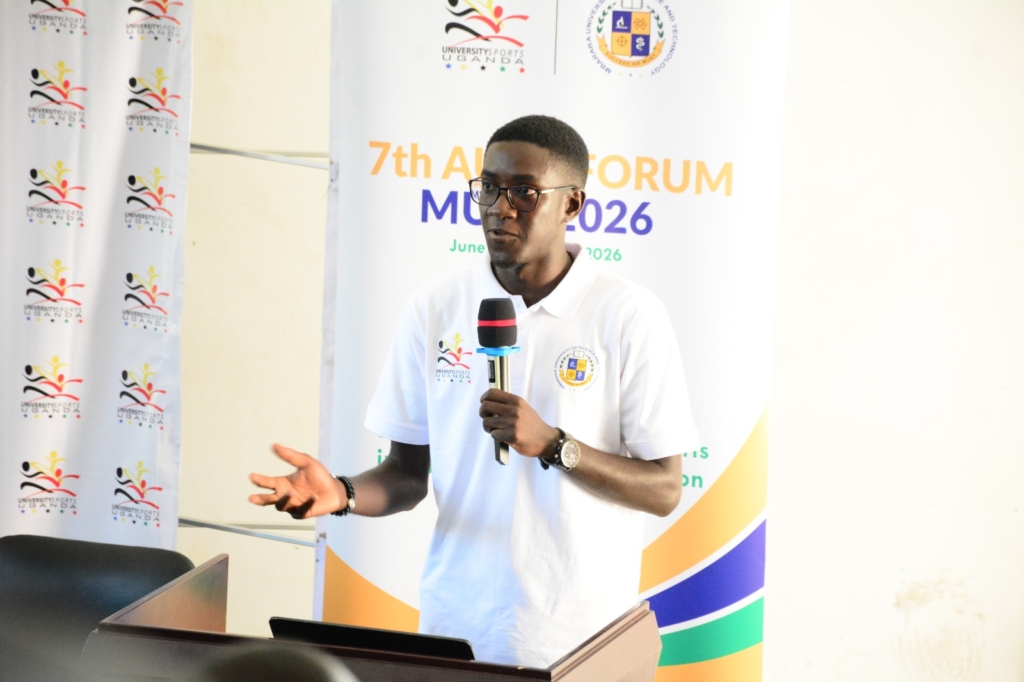
Meanwhile, in East Africa, Stewart Agaba ensures that student welfare remains at the forefront of Sports Governance.
Taking the microphone at the 7th AUUS Forum MUST 2026, hosted by the Mbarara University of Science and Technology, Stewart spoke directly to university deans, sports tutors, and campus executives on institutional safety nets for competitors.
“Engaging with university leaders and fellow student leaders reinforced the importance of creating systems that enable student-athletes to succeed both in the classroom and in sport. Opportunities like these challenge me to think more critically, engage with diverse perspectives, and contribute meaningfully to the development of University Sport in Uganda.”
The global connectors
Learning is continuous and often happens through people, exchanges, and real-life experiences
University Sport serves as a powerful global language, but maximising its reach requires deliberate international diplomacy. Across Europe and South America, these Ambassadors travel, exchange strategies, and prove that effective Sports Management relies entirely on cross-cultural connections.
Giulia Ercole (Italy)
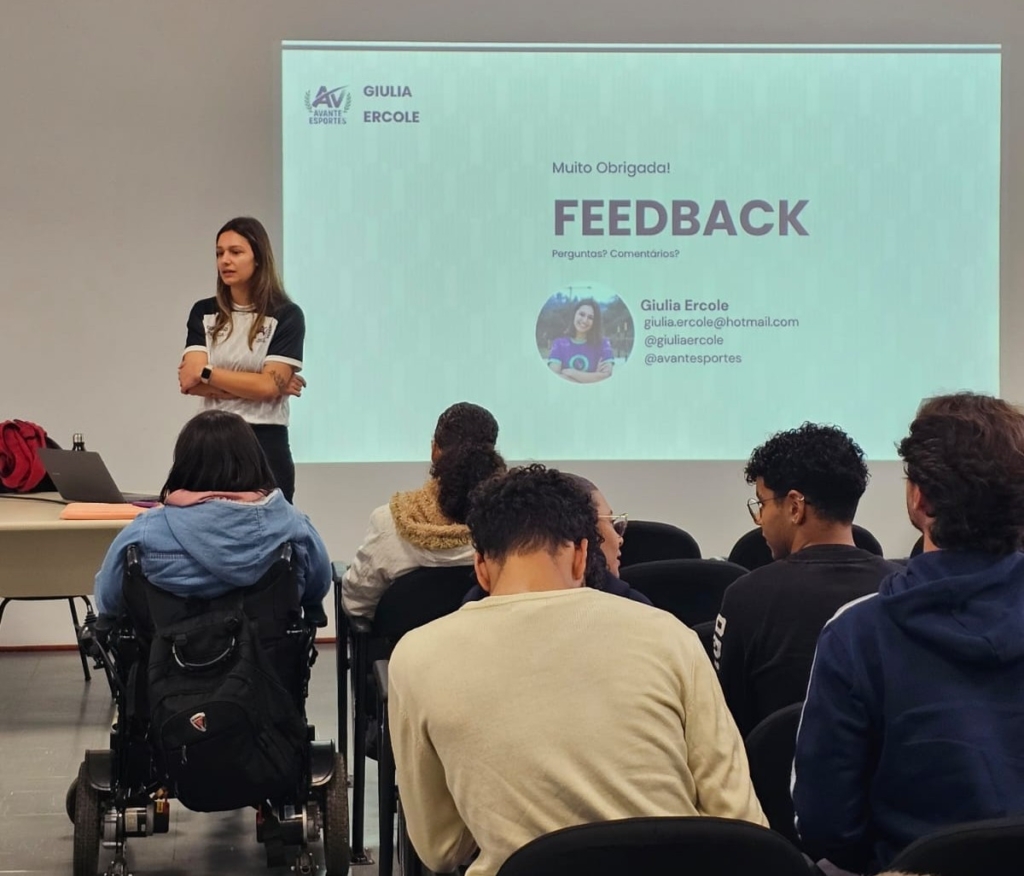
Giulia Ercole’s work focuses on proving how University Sports initiatives can transform local communities. She recently returned to the Federal University of Paraná (UFPR) in Brazil to deliver an in-person presentation on using sports programmes to build leadership and teamwork skills.
For Giulia, her grassroots development work with Avante Esportes served as the exact foundation that prepared her to work on the international stage at the FISU World University Games.
“One challenge is translating personal and international experiences into meaningful discussions that connect with students’ realities, but the engagement and questions from participants made it very rewarding.”
Joëlle Lanz (Switzerland)
Taking that international momentum a step further, Swiss Ambassador Joëlle Lanz focused her first Ambassador year on turning those singular global connections into a permanent cross-continental network. Recognising that the challenges student-leaders face are universal, Joëlle translated her ambassadorship into a cross-border strategy tour.
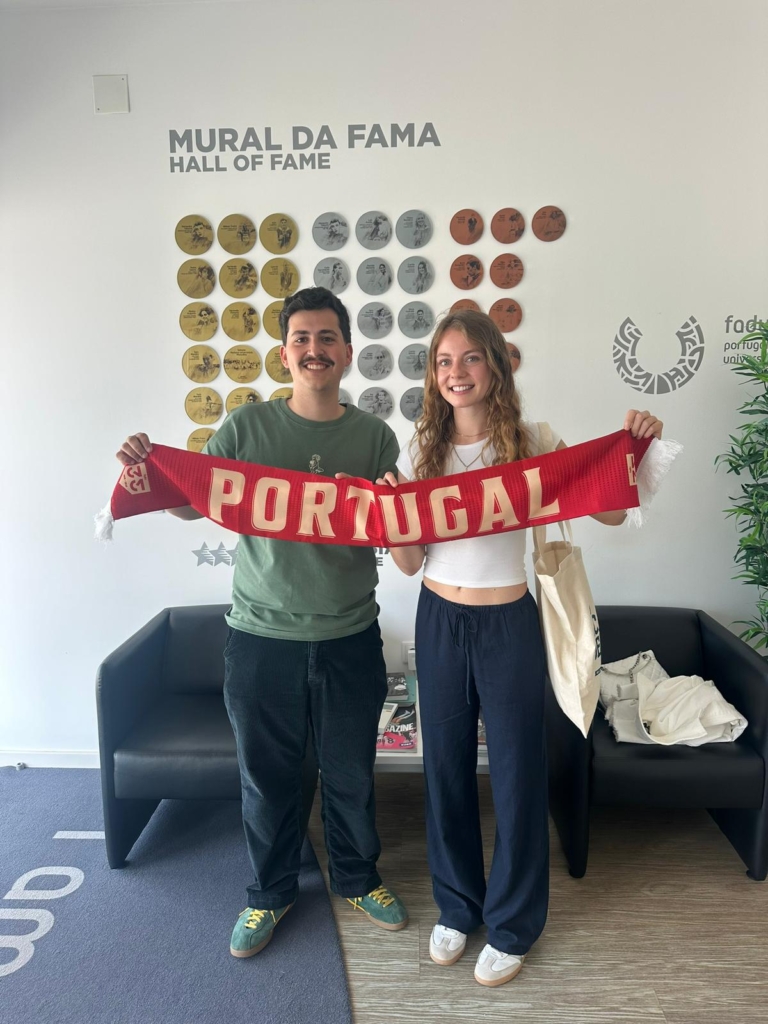
She engaged in knowledge exchanges with former Swiss Ambassadors, collaborated on the ground with German Ambassadors in Tübingen, and completed a study tour of elite sports facilities at the University of Lisbon alongside Portugal’s FADU team.
“Through Zoom meetings with both current and former Swiss Ambassadors, as well as numerous conversations with students from different continents, I had the opportunity to learn more about the impact of FISU in various countries, the opportunities available to student-athletes, and the challenges they face.”
The event architects
What I enjoyed most was the spirit of unity, solidarity, and collaboration that brought together students, volunteers, and organisers around a common goal.
Planning a sports tournament is a logistical sprint that requires immense composure under pressure. Whether coordinating thousands of competitors or managing student volunteers, these event managers serve as the operational glue holding major games together.
Patrīcija Pļenkova (Latvia)
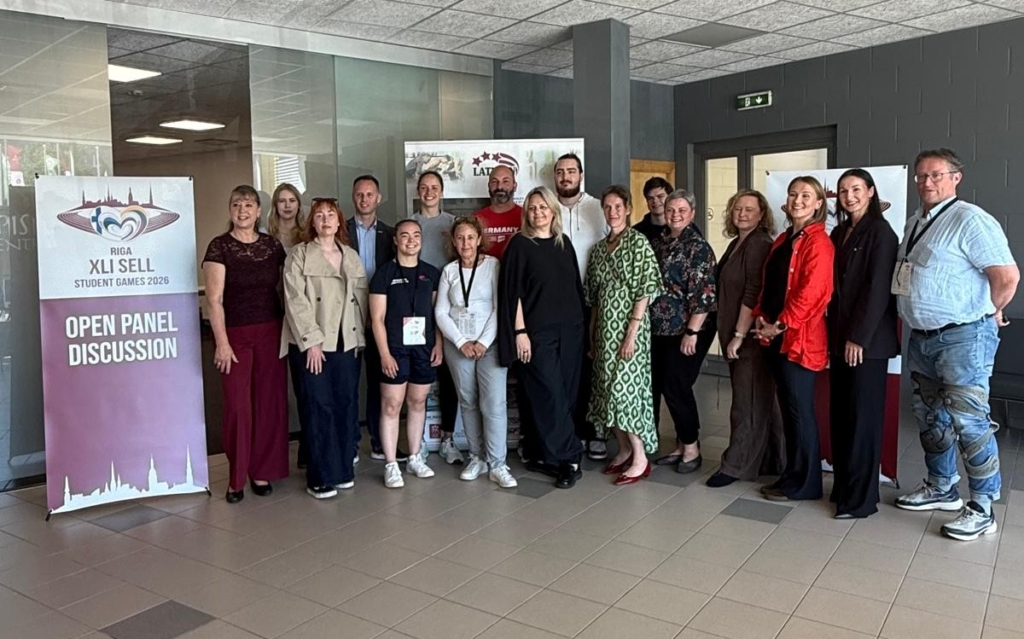
In the Baltic region, Patrīcija Pļenkova took the wheel as Event Operations Manager for the historic Riga 2026 SELL Student Games.
Beyond keeping match-day logistics smooth for over 1100 participants, she stepped up to moderate a high-profile panel discussion focused on how digital technology can help modern student-athletes balance their daily training and study commitments.
She shared the stage with major regional sport figures, including Olympian Gunta Vaičule (Chair of the Latvian Olympic Committee Athletes’ Commission) and Andrej Pisl (EUSA Director of Projects & Policy), to map out modern administrative solutions.
Lusine Hambartzumyan (Armenia)
In Armenia, Lusine Hambartzumyan successfully coordinated a month-long campus sports tournament. Managing over 400 participants across 14 distinct disciplines required navigating complex scheduling demands and the daily pressures of a large-scale event.
For Lusine, overcoming these organisational challenges highlighted the broader value of university sport.
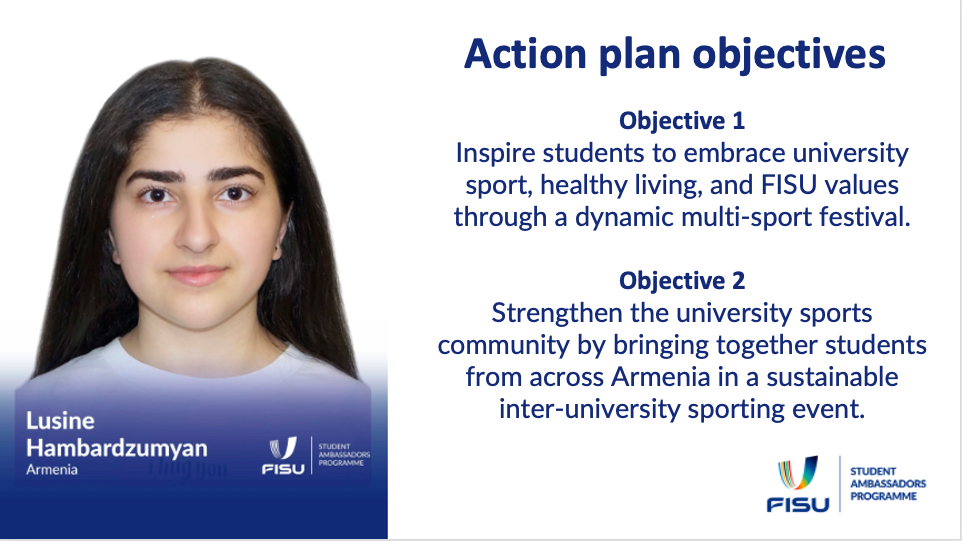
“More than just a tournament, this event became a platform that united students from different backgrounds, faculties, and interests,” Lusine explains. “Seeing hundreds of students come together, support one another, and create unforgettable memories reminded me that sport has the power to connect people and inspire teamwork.”
Mariama Sylla (Guinea)
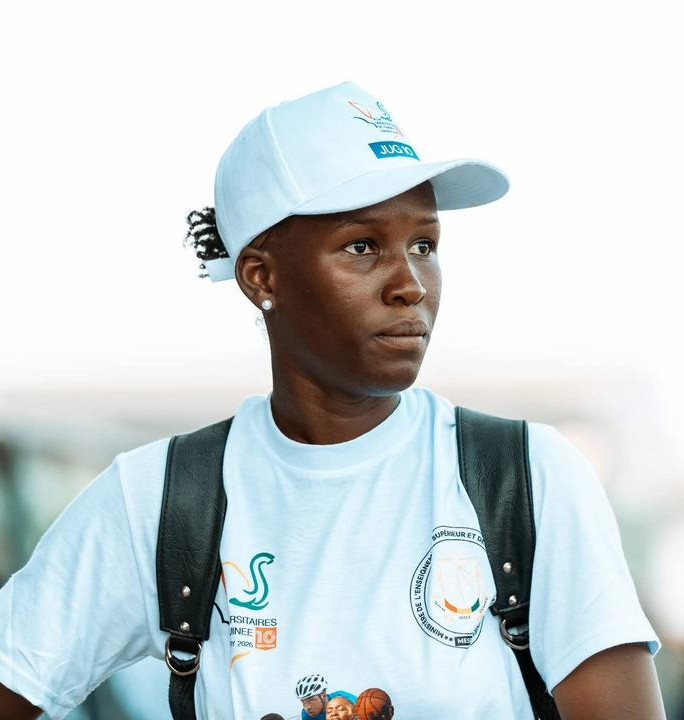
Down in West Africa, the 10th University Games of Guinea in Conakry owed its electric energy to massive volunteer mobilisation, a task driven directly by Mariama Sylla. Working inside the Volunteering and Student Mobilisation Sub-Commission, Mariama spent 15 days coordinating venue setup, handling student outreach, and managing match-day schedules.
“Over the course of 15 days, I participated in organising activities, supervising and supporting volunteers, and promoting university sports among students.”
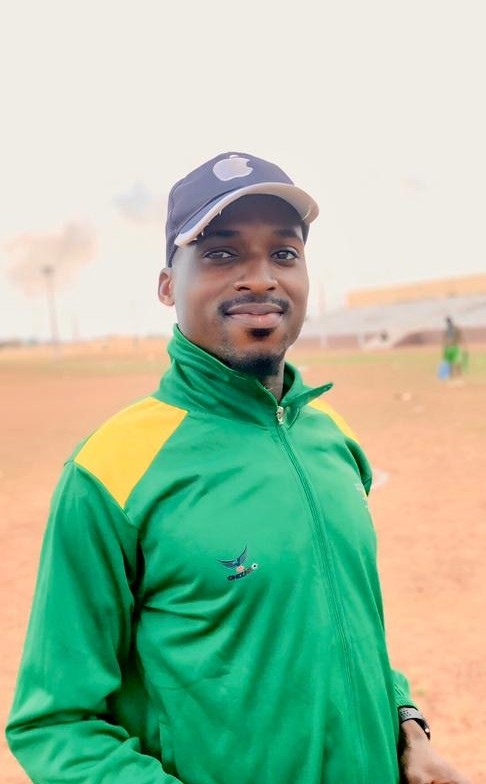
Just across the border in Mali, Boureima Ouédraogo knows first-hand that getting a new sports event off the ground takes serious patience and coordination.
Throughout his ambassador journey, Boureima has focused on bringing students together by launching fresh athletic initiatives from scratch. From organising student track-and-field test events to representing FISU at the Mali University Sport Club’s (CSUM) first-ever martial arts day, he has been learning the realities of sports management directly on the field.
“Through these experiences, I am learning how to organise sporting events, lead initiatives, and engage with students. Despite some challenges in coordination and organisation, these moments have helped me grow in leadership, responsibility, and teamwork.”
What comes next
The work of this cohort shows that the next generation of sports leaders is not just waiting for permission to lead. They are identifying gaps on their campuses and building the solutions themselves. As University Sport continues to evolve globally, the message from these student leaders to anyone still watching from the side-lines is best summarised by Ester Kolawole’s open invitation:
To every student wondering if they can make a difference before graduation: you absolutely can. Start where you are. The field is open.
For those ready to step onto that field, the FISU Student Ambassadors Programme is currently welcoming applications for its next season. If you want to drive University Sport initiatives, advocate for student-athlete welfare, and gain hands-on experience in sport administration, your opportunity starts now.
Applications are still open, please reach ambassadors@fisu.net for any questions.