
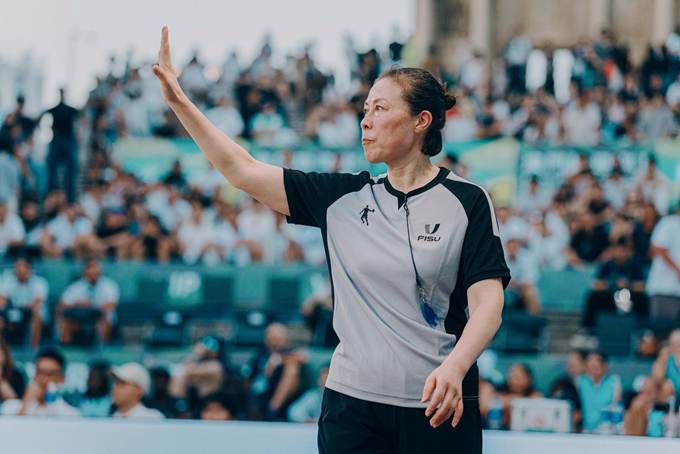
Meet Nanjin Medical University physical education teacher and 3×3 referee Shi Qirong, born in 1974 just like the sport she serves, whistle in mouth.
FIBA A-licensed referee Shi Qirong lowers the whistle from her lips and brings her signaling hand down in a crisp, practiced motion. Her gaze sweeps steadily across the half-court, sharp and attentive, while behind her, the weathered stone facade of the Ruins of St. Paul’s casts long shadows in the afternoon sun, framing the bright 3×3 basketball court at the heart of Macau’s UNESCO site.
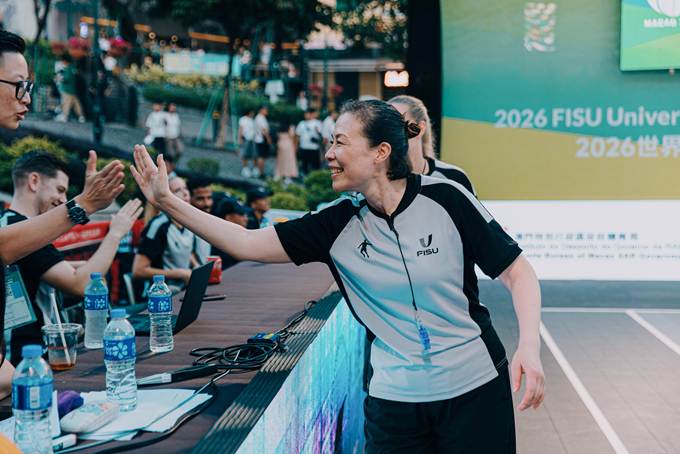
Shi, who was born in 1974, the very same year when of the Gus Macker 3-on-3 tournament began in Lowell, Michigan. And in Macau, China, she stood not only as a Chinese referee on the international stage, but also as a physical education teacher at Nanjing Medical University. Her international officiating career and her work nurturing student referees on campus are connected by a shared commitment to university sport.
From the playground to the world stage
Shi Qirong first developed an interest in basketball in primary school, where she joined the school team. She has stayed involved in the sport as a non-professional athlete ever since, balancing basketball with her studies and later carrying that passion into her career as a physical education teacher.
Her first encounter with competitive 3×3 basketball came in 2013, at the FIBA Asia Cup in Nanjing. The official rulebook then spanned barely two sheets of A4 paper. She earned her FIBA 3×3 referee certification in 2015. By then, FIBA had already launched its long campaign for Olympic inclusion; a first bid, for the Rio 2016 Games, had ended in disappointment, but the federation pressed on, refining its competition system and pushing forward.
Her first FIBA-nominated international assignment after qualification came at a FISU tournament in 2016: the FISU University World Cup in Xiamen, China. “For me, FISU competitions hold a very special meaning. It was my very first FIBA nomination. It launched my entire 3×3 officiating career,” she said.
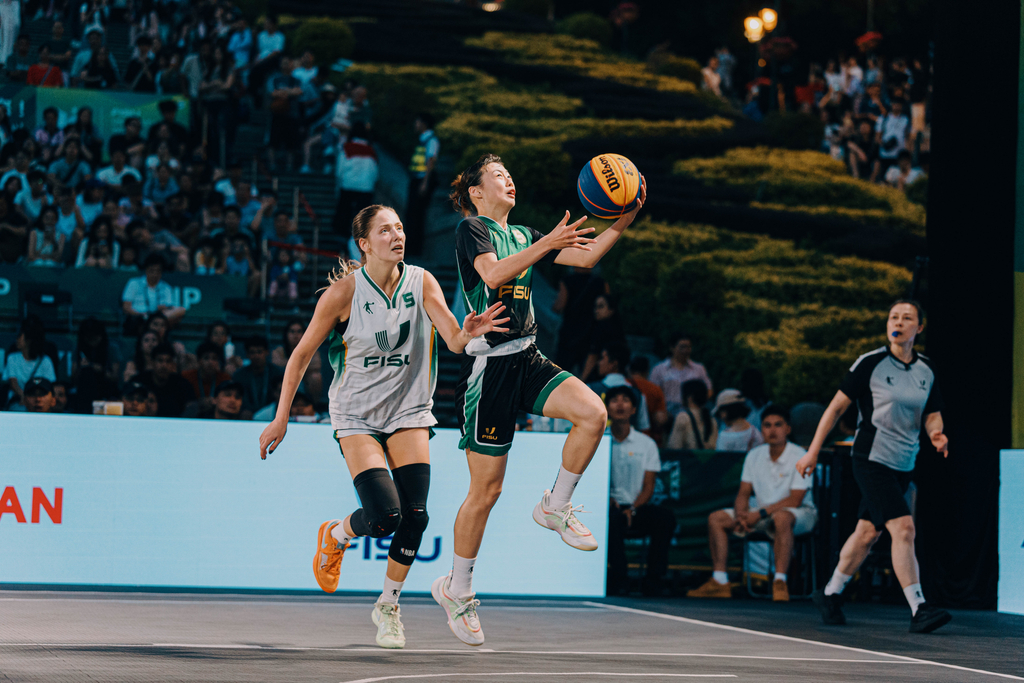
The turning point for the sport came in June 2017, shortly before the FIBA 3×3 World Cup in Nantes, France, when the International Olympic Committee announced that 3×3 basketball would officially join the Tokyo 2020 programme. After years of quiet, uncelebrated effort, the street sport had reached the world’s biggest stage.
Shi’s own career soon reached the highest international level. She officiated 3×3 basketball at both the Tokyo 2020 and Paris 2024 Olympic Games. Today she is not only a FIBA 3×3 international referee, but she is the oldest active A-level 3×3 referee in the world!
The love that sustains her
That announcement closed a long, unassuming road for the sport; for Shi, it opened the highest stage of her career. Her own three decades in officiating had their peaks and valleys too. When asked what has sustained her through all these years, her answer is simple. “There is no reason other than love. You have to love this purely. Looking back, the journey has been extremely hard, with so many low points, so many moments you can’t even talk about with others. Only love can carry you all this way.”
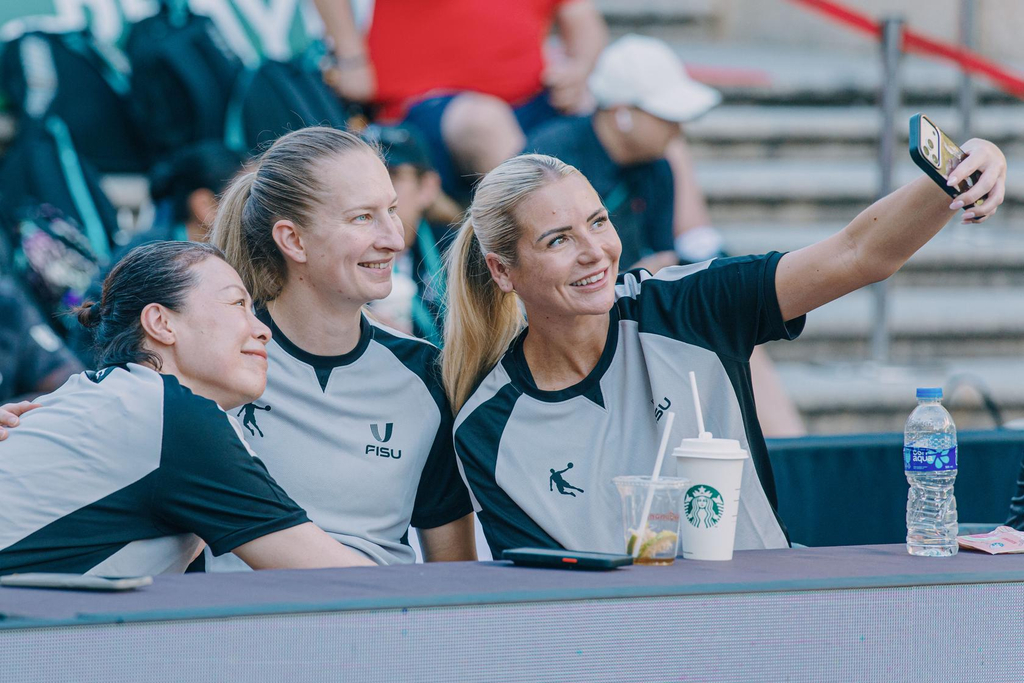
FISU places great emphasis on dual career development, helping student-athletes balance sporting commitments with their university education. Shi’s experience at Nanjing Medical University brings a related dimension into focus: university sport should not be limited to playing or competing, but should also enable students to develop a sporting identity — as referees, for example — that they can carry with them throughout their professional lives. This is something FISU also encourages through the YouRef Programme. Off the international court, Shi works as a physical education teacher at Nanjing Medical University, where she has run the campus basketball referee club for more than a decade. It is here that her belief in dual career development finds its most tangible expression.
Medicine meets basketball
Her students are training to be doctors, nurses and hospital administrators — navigating one of the most demanding academic curricula there is. Yet alongside their medical studies, many learn to officiate basketball, gaining practical experience at games both on campus and beyond. Even after graduation, when they take on full-time roles in hospitals, some of them continue to officiate, carrying their love for the game into their professional lives.
For Shi, the parallels between clinical medicine and basketball officiating are striking, and they all circle back to the same core of courage, precision and accountability. “Clinical surgery is just like officiating. Before a game, you can prepare — study the teams’ playing styles, the players’ personalities, anticipate emotional outbursts and other surprises. But once you step onto the court, things don’t always go as planned. The game is totally unpredictable,” she explained.
“It’s exactly the same with surgery. You have to have the courage to keep going. You can’t just stop because things are different from what you predicted. Everyone is counting on you. Stopping is not an option.”
“You have to be brave enough to make the call, and brave enough to face the result. The call might be right and fit the game, or it might not — and we usually call that a wrong decision. Do you blame your partners, or do you take responsibility? That choice changes everything about how you carry yourself on the court and how you communicate with players.”
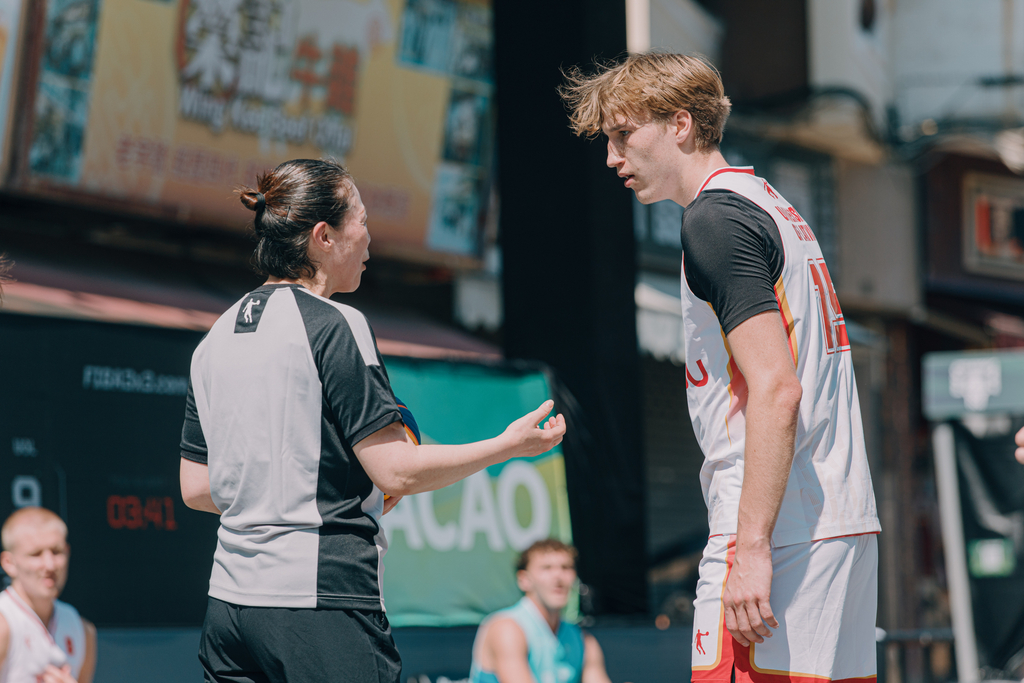
At the highest level, both call for almost surgical precision. For Shi, this is the true value of university sport: the resilience, judgement and composure students learn on the court do not distract from their medical careers — they make them better healthcare professionals.
Passing the torch: nurturing the next generation
Today, Shi is entering a new phase of her career. Alongside her active officiating duties, she has become one of only 10 FIBA 3×3 referee instructors in the world — shifting from making calls on the court to guiding the next generation of officials.
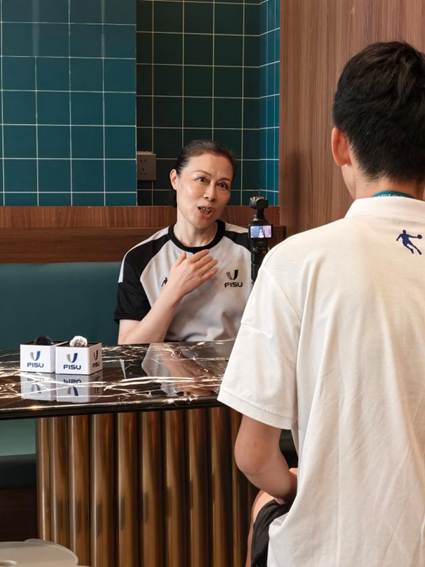
“Starting last year, I’ve gradually transitioned from being purely a referee to taking on the role of an instructor. I hope that in the future, I can not only enjoy the fun of officiating, but also the joy of watching young referees grow. That’s something I’m really looking forward to,” she said.
It is a new kind of challenge. Experience alone is not enough; the job requires finding the right way to share hard-earned lessons, tailored to each young referee’s needs.
“The opportunities now are incredible. When I got my certificate in 2015, I went over a year without a single match. It wasn’t until October 2016 that I received my first FIBA nomination for a FISU event and launched my international career,” she said. “But the young referees here this year just passed their exam in August, and by October they already have the chance to show their ability. What an amazing opportunity. A referee can only find room to grow by actually stepping onto the court and officiating.”
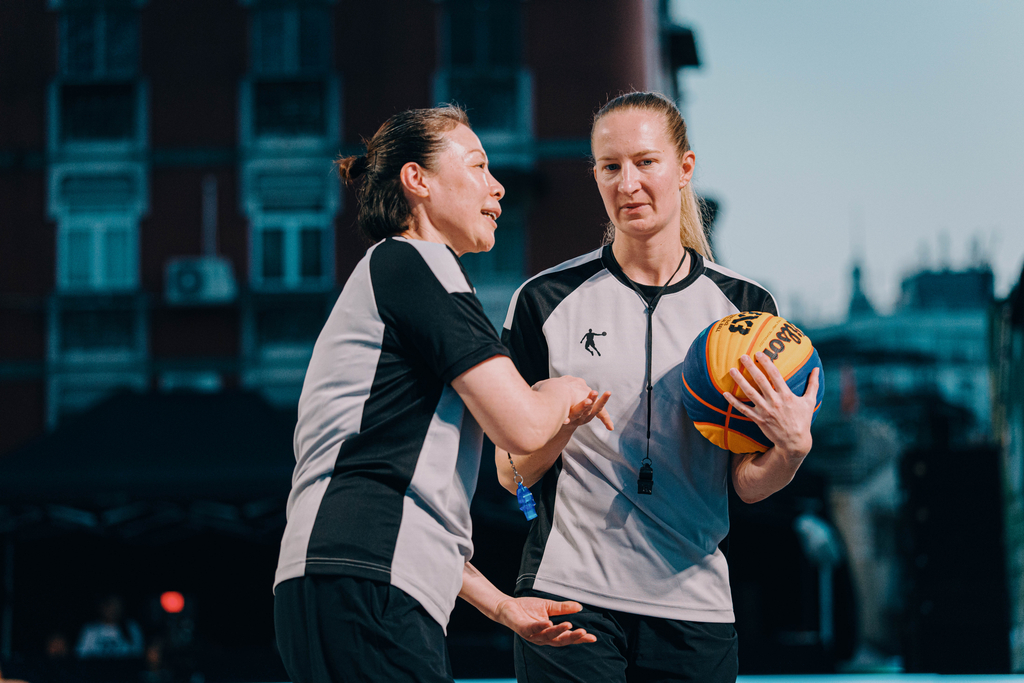
For Shi, passing the torch is therefore about more than sharing technical knowledge. It is about giving young people the opportunity to practise, take responsibility and discover their own place in sport. In doing so, the club passes its knowledge and experience to the next generation, helping build a stronger and more sustainable university sporting community.
Written by Xicheng Wang, FISU Student Ambassador 2024-2025
Related News
The Thai greens ready for the best student-golfers
Italy dominates the FISU Shooting Sport Championship
All eyes on the centre of the target