

Are quotas necessary? What new tools can be used to offer women more opportunities? Experts shared their knowledge and experience during the last Gender Equality Committee meeting.
Exchanging ideas and experiences from different parts of the world and learning from other stakeholders is central to advancing the university sports movement. With this in mind, on 17 April. 2026, Gender Equality Committee Members from seven different countries – including Chair Rosaura Méndez-Gamboa from Costa Rica and vice-chair Michelle Tanner from Ireland – travelled to the FISU headquarters in Lausanne, Switzerland for their in-person meeting. Over one pretty packed day, perfectly organised by Virginie Rochat, FISU Education & Development Junior Manager, they were joined by Adam Pratchett (GBR) and Nobubele Phuza (RSA) online to discuss the FISU new statutes, learn from the International Olympic Committee experience thanks to Gender Equality & Inclusion Manager Pedro Dias before attending workshops.
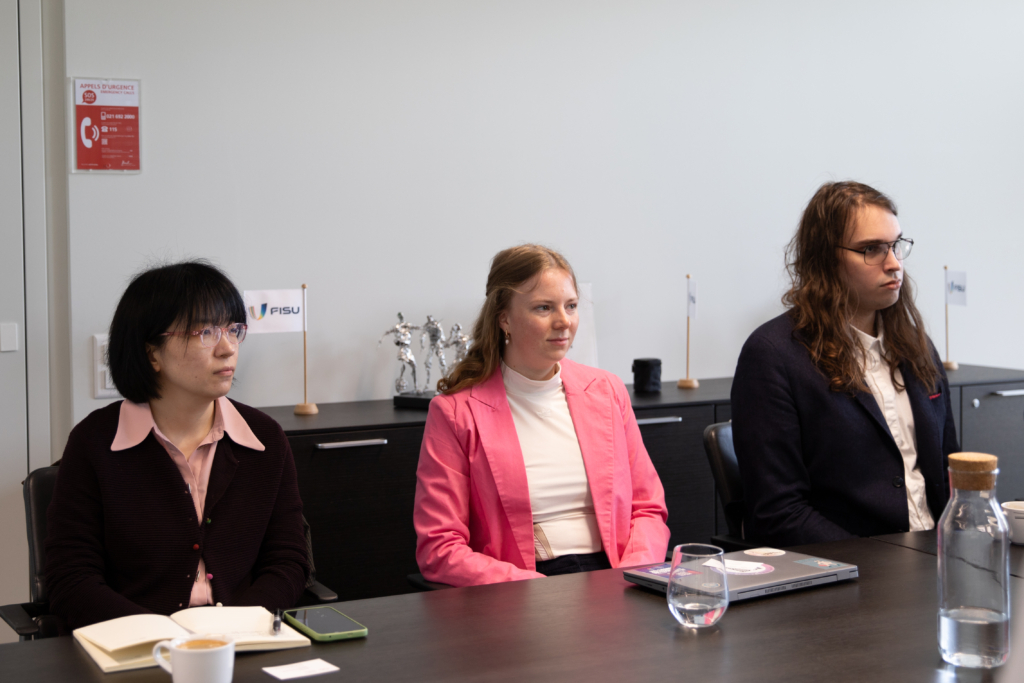
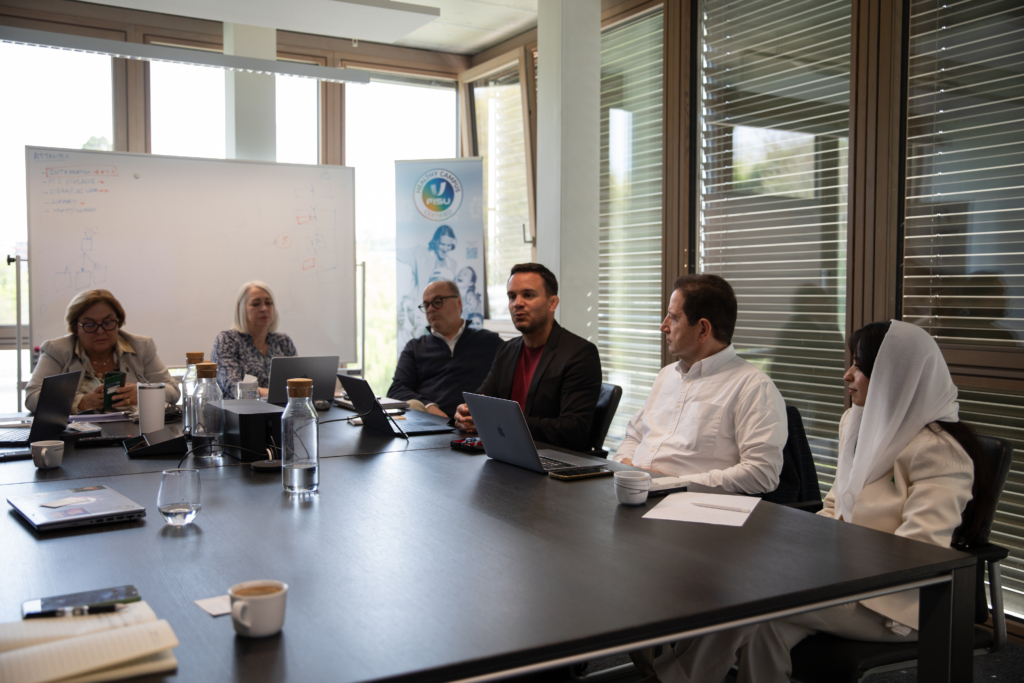
Throughout the day, the committee members used different techniques to find solutions to address gender equality throughout the university sports ecosystem, from the very base of the movement – the update of the FISU statutes – to increasing women’s representation in coaching, technical roles and male-dominated sports.
An emphasis on long-term cultural and systemic change
The different approaches that were identified range from addressing social challenges, incentives, financial support, leadership mechanisms, communications training, media campaigns and of course country to country exchange of expertise.
International Olympic Committee Gender Equality & Inclusion Manager Pedro Dias shared the IOC experience, encouraging FISU Gender Equality Committee to focus on long term change (4-12 years), on aligning actions with strategy rather than only targeting numbers and to really strengthen the collaboration between FISU and the National university Sports Federations on this specific topic.
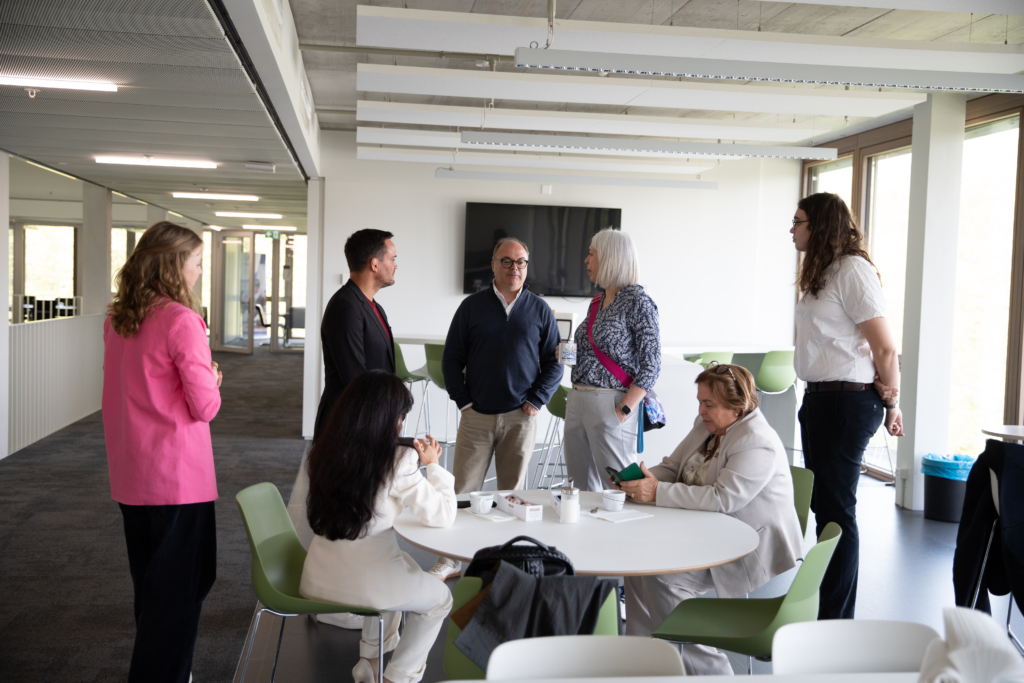
But of course, the discussions were not limited to the meeting rooms, and the lunch break and every coffee break were an extra chance for the committee members to interact and to also discuss ideas and measures with FISU staff present at the Synathlon building.
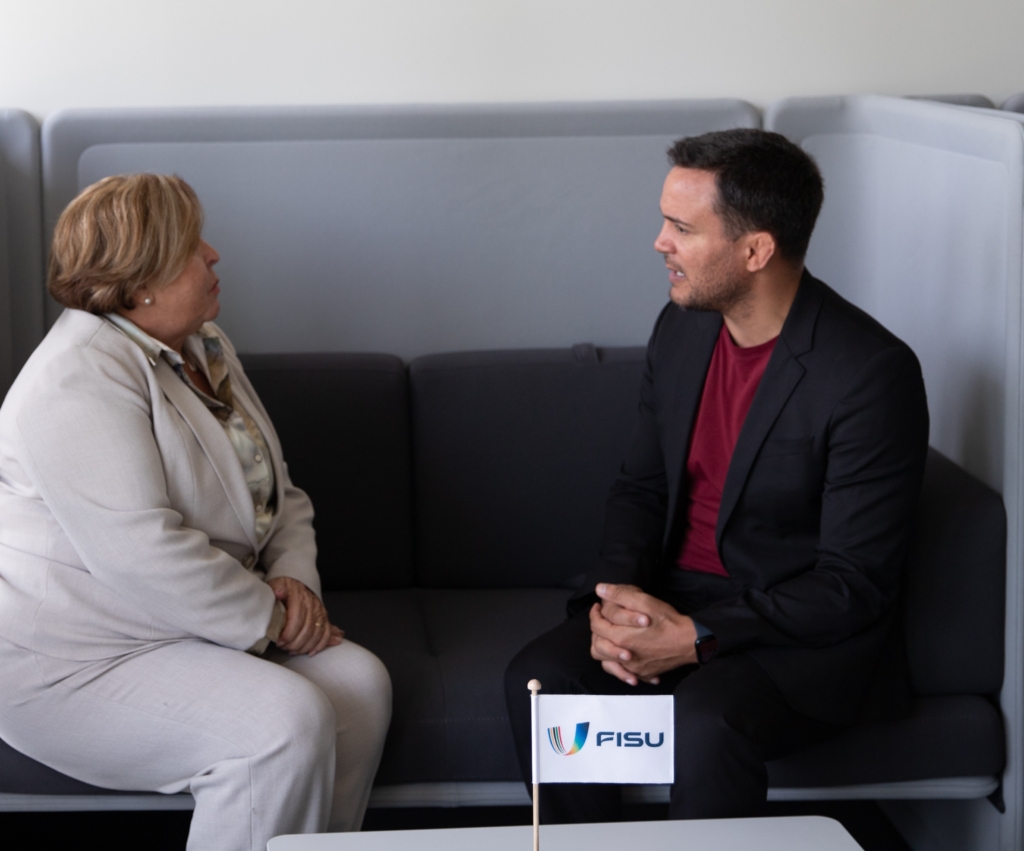
The presence in Lausanne of the Gender Equality Committee Chair and FISU Executive Committee Member Rosaura Méndez-Gamboa was also the perfect occasion to put her through a cross interview with Pedro Dias.
Cross interview
Rosaura Méndez-Gamboa (FISU) and Pedro Dias (IOC)
- What is specific to addressing gender equality in the university sports world?
- Should the focus be more on the field of play or on the boardrooms?
- Are quotas a necessity or a last resort?
- How can we make sure no countries get left behind?
Our work must be focused at the base, so that gender equality is then adopted throughout the whole sports ecosystem.
The young generations expect us to take action and, through sport, to change the world!
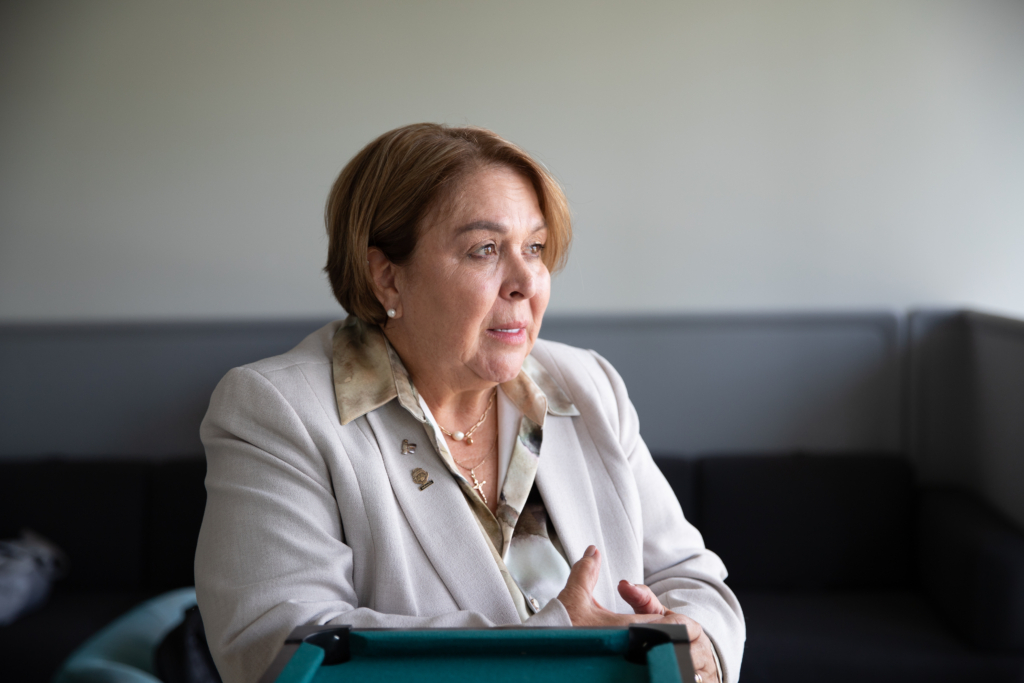
- “For me, FISU and the university sports movement has a great position, because we all come from academia, whose role is to shape the future generations. With its sports programme but also with its educational programme, FISU can reach a huge amount of people and serve as an example to other federations. For example, our Executive Committee is a great example of female representation and this is the results of many years of work giving equal opportunities to women and men. FISU can act as a leader in this aspect on the world of sports federations.”
- “Both! We have to be strong in the areas where the decisions are made. Our work must be focused at the base, so that gender equality is then adopted throughout the whole sports ecosystem.”
- “The quotas are necessary, there is no doubt about that. But they can suffise alone. They are only useful accompanied by explanations, guidelines, incentives, workshops to move forward. The biggest injustice we are facing is the lack of access to training and education for women: they simply don’t have the same opportunities as men.”
- “When you are speaking about gender equality at world level, you need to be very strategic. The situation is so different from continent to continent, from country to country. This is why I prefer to speak about equal access to opportunities, which is built both by men and women. And because it is universal, the world of sport and of university sport can approach and guide all countries, despite their differences.”
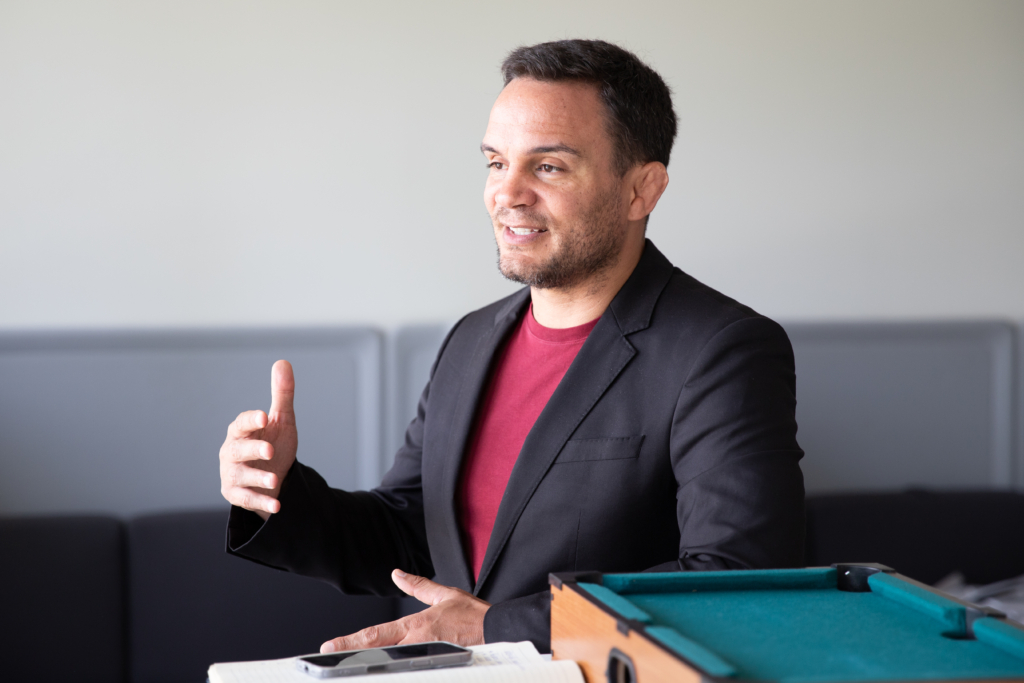
- “The university sports world has access to young educated people, who are the future leaders of the sport mouvement and of the world. The opportunity for innovation and change is huge. Especially since the young generations expect us to take action and, through sport, to change the world! I am here today to see how the IOC and FISU can work together to reach our objectives and create a sustainable change.”
- “The focus should be everywhere! Field of play, boardrooms, but we should also find gender equality among coaches, managers, medical staff, referees… In the past, we mostly focused on participation, because you must start somewhere, but it doesn’t make sense to reach parity at the Olympic Games and then to see that the entourage mainly consists of men. Women should be – and will be – represented in all areas of the sports world.”
- “Research proves that quotas are the most efficient way to achieve gender equality. We are talking about decades of discrimination, so quotas are a positive affirmation to bring women on board. They have the same capacities as men, but they don’t have the same opportunities, so quotas are a way of balancing this out. In some countries, quotas are no longer necessary, which is fantastic. My hope is that in a couple of years I will no longer have a job because gender equality will no longer be a topic.”
- “Working globally has indeed many challenges with different cultures, religions and ethnicities. We have to adapt our speech and respect these differences. But we need to guarantee that, whatever the context, becoming a coach, for example, or not is this woman’s decision and nobody else’s.”
If you want to know more about the International University Sports’ actions towards gender equality, click here or watch our most recent webinar on the subject.
Related News
Watch universities battle under the FISU hoops in Macau, China
Poland sees success in bridge while Germany controls the chess board
The sharpest minds of world university sports meet in Liaocheng