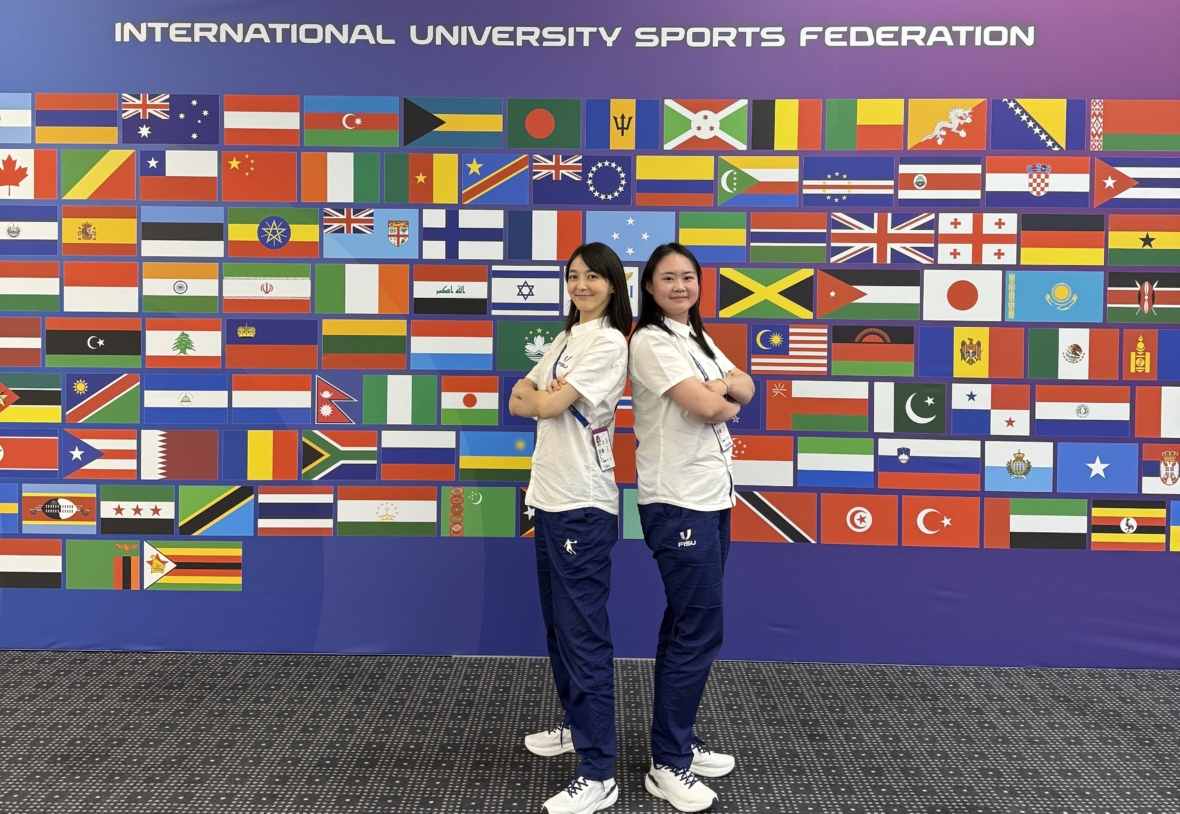

The International University Sport Federation helped design and deliver the first module of the United Nations Institute for Training and Research’s Executive Diploma in Sustainable Sport.
As part of its commitment to sustainability, FISU continues to embed environmental, social and economic sustainability across its operations, events and member networks. This work has been rooted in FISU’s Strategy 2027 and will gain even more importance in the upcoming years with FISU Strategy 2031, where sustainability is positioned as a core leadership and governance principle, rather than a standalone activity.
Within this framework, FISU was invited to collaborate with UNITAR, the United Nations Institute for Training and Research, on its Executive Diploma in Sustainable Sport, delivered in Riyadh, Saudi Arabia, from 1 to 5 February 2026. The programme focuses on how mega sporting events can be planned and delivered to create lasting societal, economic and environmental impact, particularly in the context of Saudi Arabia’s upcoming major sports investments.
FISU contributed to the programme through assisting the design and delivery of the first module, “Societal Impact of Mega Events”, which opened the Diploma, with the conceptual foundation for the programme by framing sustainability as a strategic leadership responsibility, rather than an operational checklist.
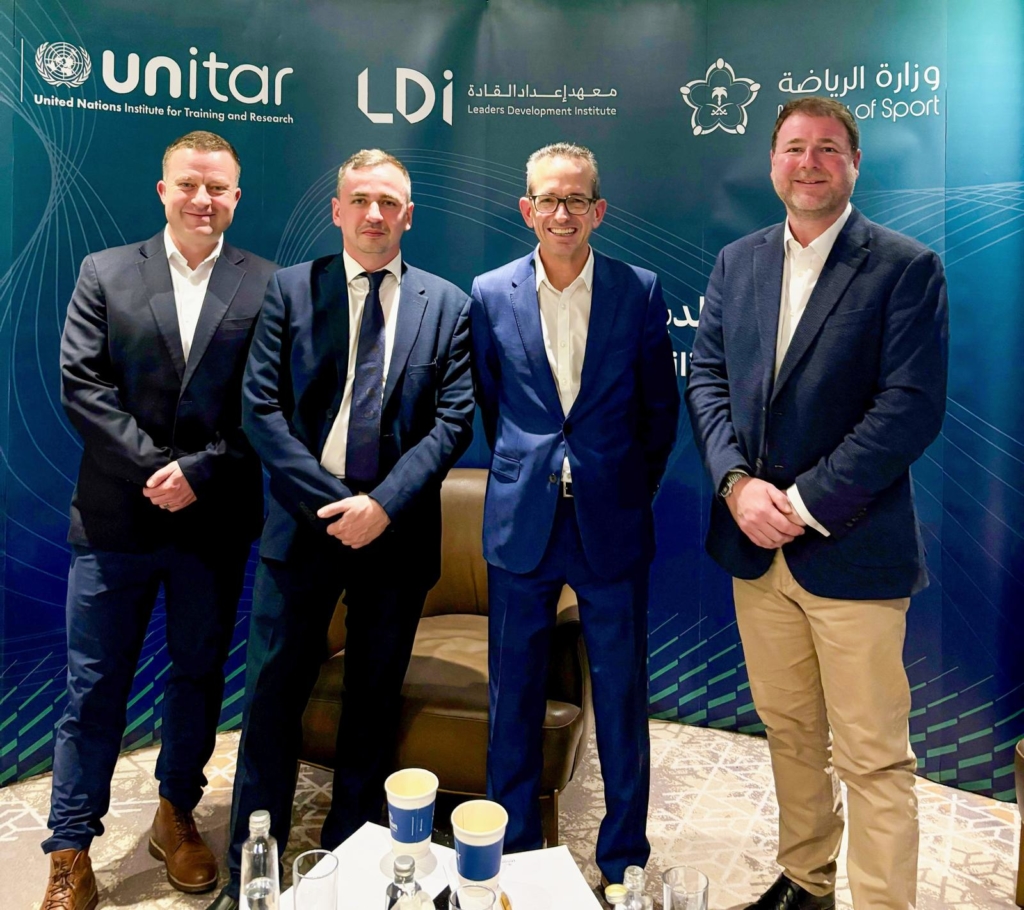
The session was facilitated by Andreas Csonka (glasses), an expert supporting FISU in strategic development, with a particular focus on sustainability, legacy and governance. “Sustainability is not a checklist applied at the end of an event. It is a leadership decision that must be owned from the very beginning if lasting impact is to be achieved” .
From events to lasting impact
The module explored how mega sporting events can move beyond short-term visibility towards lasting value, addressing questions such as who truly benefits after the event ends, what societal changes endure beyond the closing ceremony, and how inclusion, access, trust and ownership can be structurally designed into events.
Rather than treating sustainability through isolated indicators, the session emphasised strategic ownership of impact, early legacy planning and the importance of embedding capability, knowledge and access within host societies. The United Nations Sustainable Development Goals (SDGs) were used as a shared language to describe outcomes, not as a compliance exercise.
“If an effect disappears with the closing ceremony, it was never impact. True legacy changes behaviour, builds capability and expands access long after the event itself is over,” Andreas Csonka underlined.
Strategic relevance for FISU
This collaboration with UNITAR reflects FISU’s broader ambition to position sustainability as a leadership and governance framework, strengthen the societal role of university sport, connect global strategies with regional and national ecosystems, and build bridges between sport, education, health and community development.
The engagement also provided valuable insights into the Saudi sports landscape and its evolving governance structures, which will inform future strategic reflections on FISU’s positioning and partnerships in the region.
By contributing to global education initiatives such as the UNITAR Executive Diploma, FISU reinforces its role not only as an event owner and governing body, but as a thought leader shaping how sport can deliver meaningful, long-term value for society.
Related News
AUSF concludes first Student Media Bootcamp