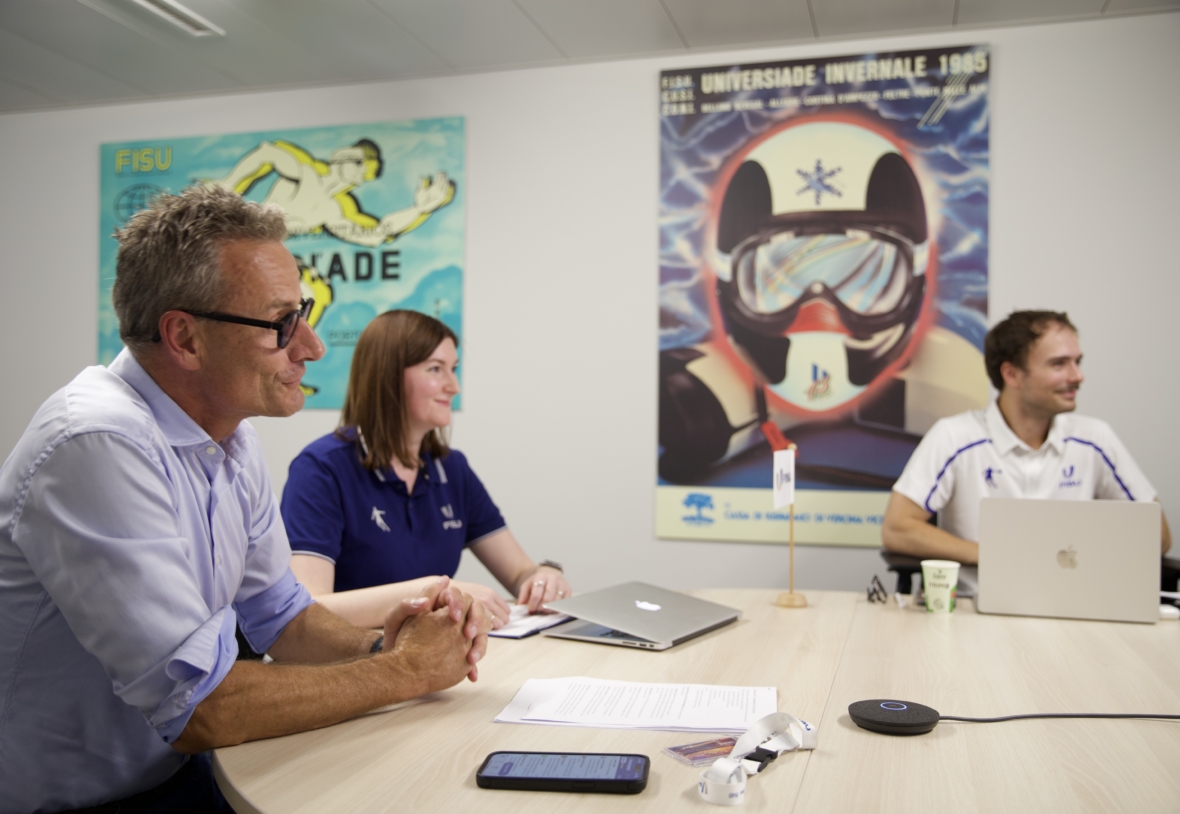

Held in the context of International Women’s Day, the gender equality in sport event attracted 178 participants who joined live.
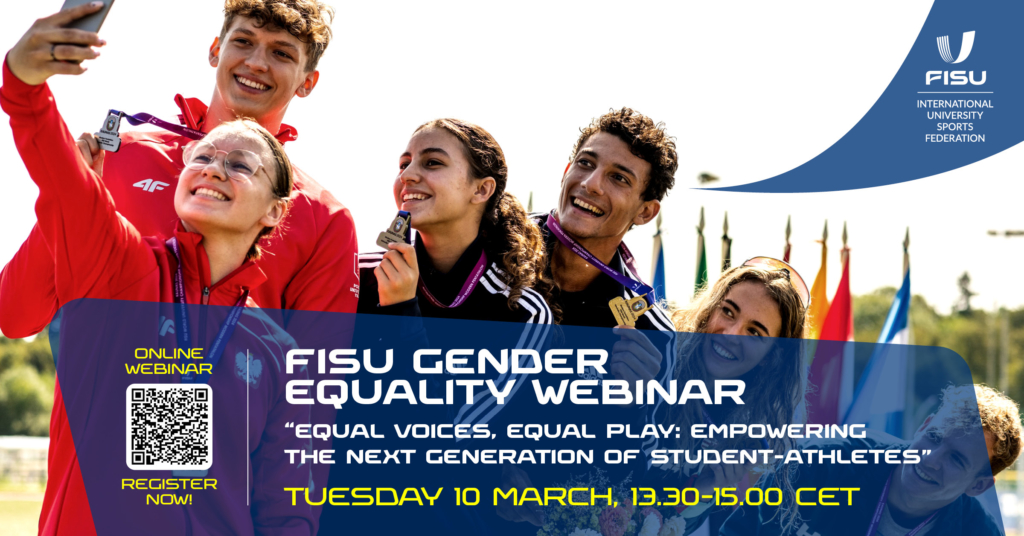
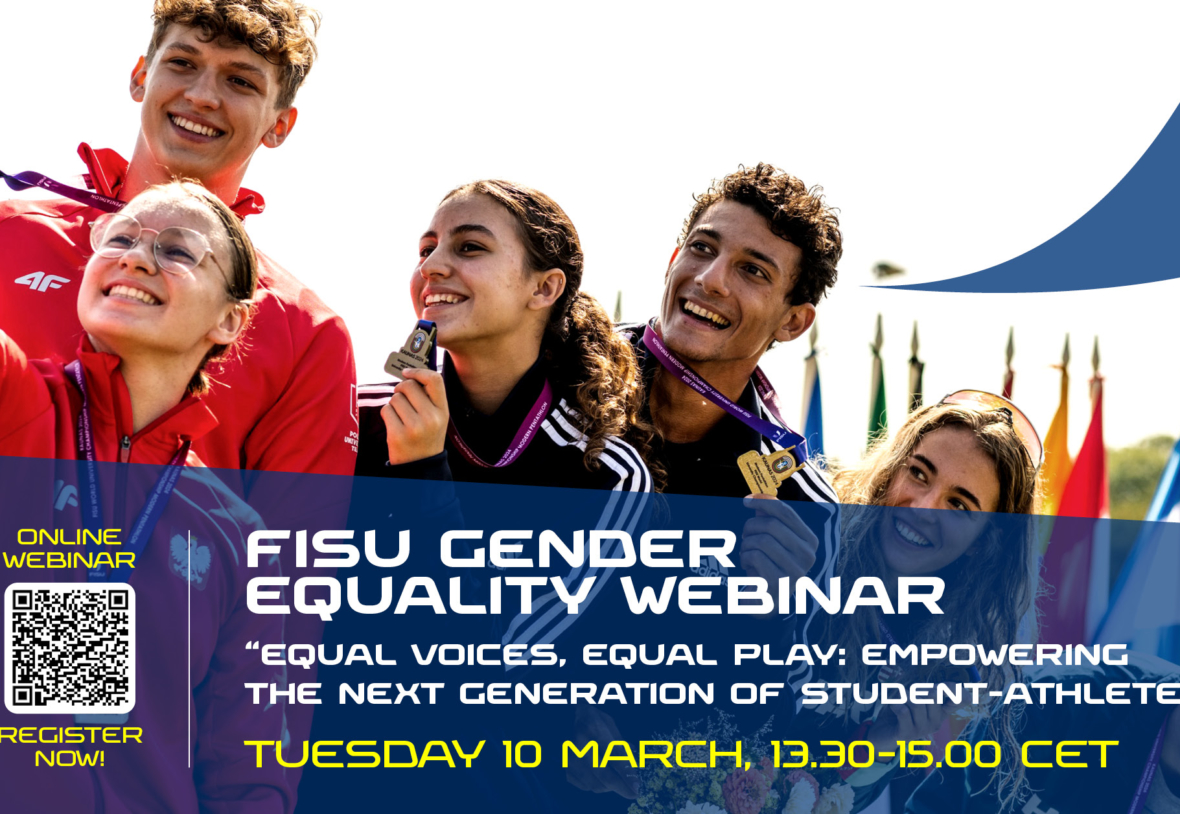
FISU’s most recent webinar, “Equal Voices, Equal Play: Empowering the Next Generation of Student-Athletes,” held on 10 March, brought together athletes, leaders and advocates from across the global sports movement for a timely and meaningful discussion on gender equality in sport.
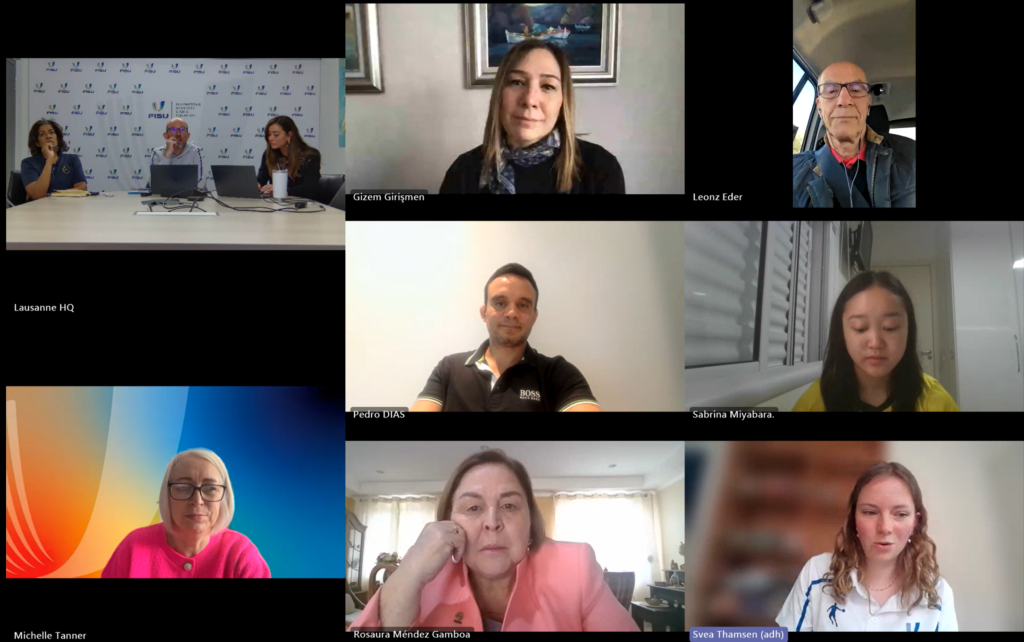
Moderated with confidence and warmth by Svea Thamsen, member of the FISU Student and Gender Equality Committees, the webinar created a space where governance, advocacy and lived experience came together. This combination gave the discussion both strategic depth and human relevance.
A strong opening call: progress made, but more to do
The webinar opened with strong remarks from Rosaura Méndez Gamboa, Chair of the FISU Gender Equality Committee (GEC) and FISU Executive Committee Member: “Gender equality is not simply an aspiration, but a responsibility that must shape the future of university sport.”
Her intervention positioned gender equality as a matter of human rights, institutional quality and sustainability, and stressed that “FISU must continue to build an organisation where equal opportunity becomes part of its very DNA”. She pointed to the concrete work already undertaken by the GEC, from safe environment proposals to leadership development and by law amendments designed to strengthen women’s representation across the organisation.
From representation to real influence
Gizem Girişmen, FISU Gender Equality Champion Awardee 2025, brought a powerful perspective shaped by elite performance, leadership and policy work. A Paralympic gold medallist and leading advocate for inclusive sport in Türkiye, she delivered one of the webinar’s most memorable messages: “representation alone is not enough.”
For Gizem, “progress cannot be measured only by the number of women around the table. True equality depends on whether women can influence decisions, shape priorities and exercise real leadership”.
She also emphasised the need to combine policy frameworks with education, mentorship and confidence-building, encouraging young women to “show up, speak out and believe in their potential to create change.”
IOC data shows both progress and unfinished work
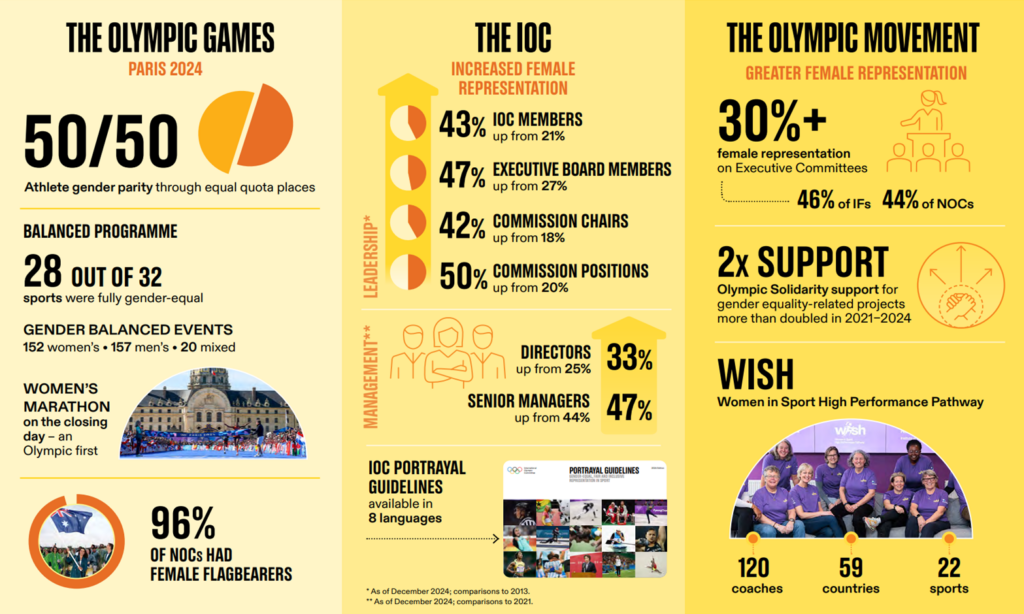
Pedro Dias, Gender Equality & Inclusion Manager at the International Olympic Committee, placed the discussion within a broader international framework and demonstrated that change requires both vision and structure. “Gender equality is a joint effort: progress depends not only on international organisations, but also on national federations, universities, clubs and athletes themselves”.
Pedro’s presentation was reinforced by compelling IOC data (cf. image below), especially in relation to the Paris 2024 Olympic Games. The numbers presented offered both evidence of progress and a reminder of unfinished work.
The student-athlete perspective: lived experience still matters
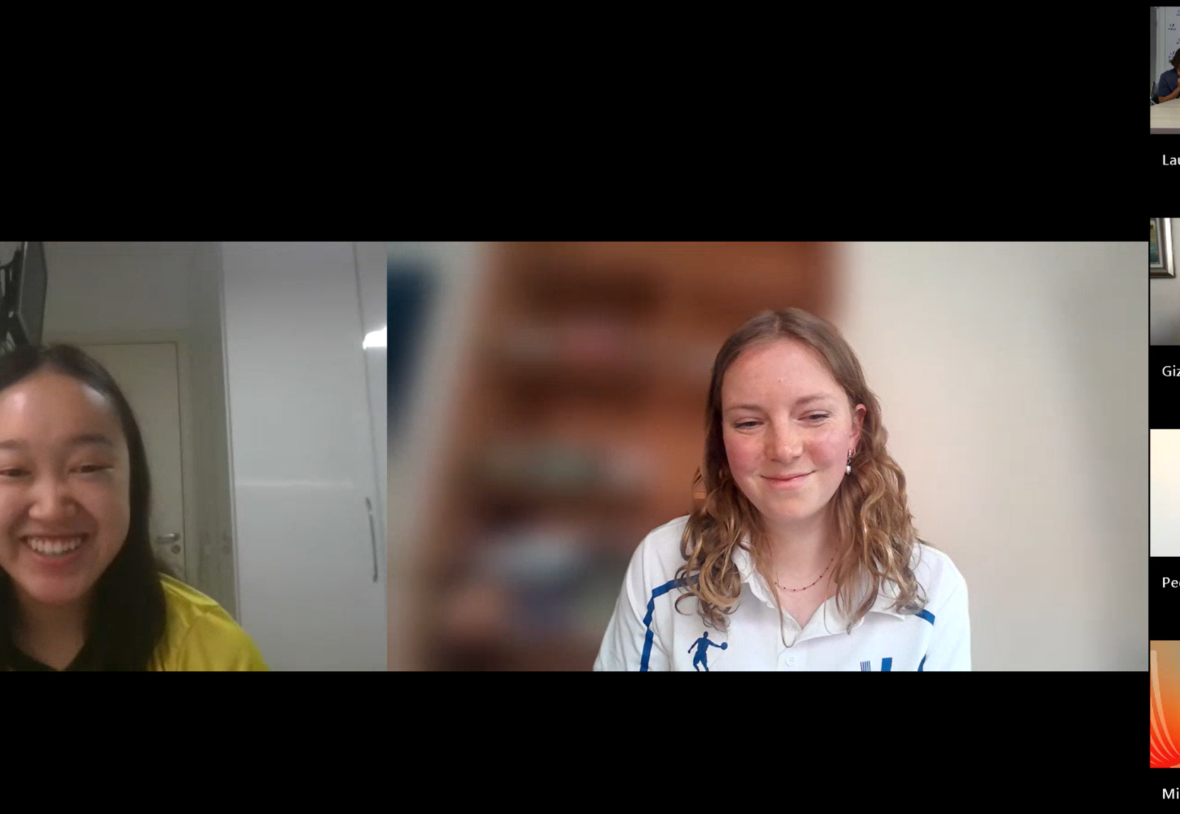
If Pedro Dias brought the institutional view, Sabrina Miyabara, a Brazilian table tennis student-athlete, brought the voice of the next generation. Her contribution was especially valuable because it grounded the discussion in day-to-day experience. Sabrina spoke honestly about balancing academic life with high-level sport and reflected on the inequalities she has witnessed in competition.
She described examples of tournaments where men’s categories were better rewarded, and even instances where no women’s category existed, forcing her to compete in the men’s draw. At the same time, she offered a hopeful perspective, acknowledging that” investment and visibility for women in sport are improving”. Her testimony showed why lived experience matters: policy discussions become more meaningful when connected to the reality faced by young women athletes.
A strategic message from FISU President
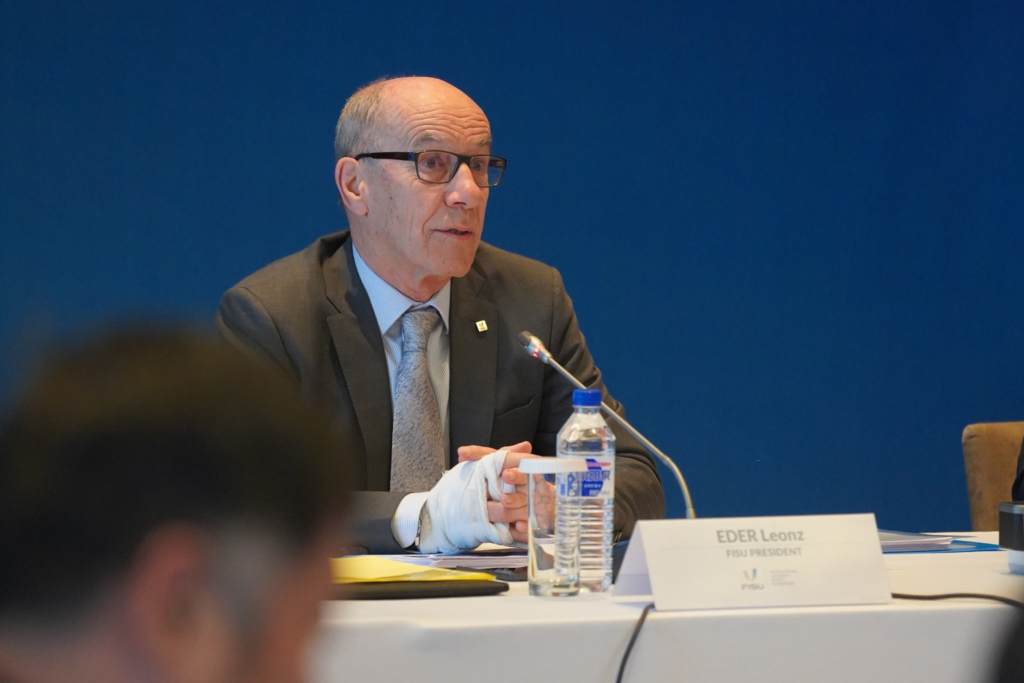
The webinar closed with an important intervention from FISU President Leonz Eder, who connected the discussion directly to the organisation’s future direction. Speaking from Budapest, he praised the work of the Gender Equality Committee and reaffirmed his commitment to strengthening women’s representation across FISU.
Most significantly, he highlighted proposed reforms to be discussed at the Extraordinary General Assembly in Changchun, China, next January, as part of the new strategic framework and revised statutes. Among the key proposals is a 40-40-20 model for representation on the FISU Executive Committee: at least 40% women, 40% men, and the remaining 20% open to either gender. This proposal reflects a concrete effort to embed equality into the governance structure of FISU itself.
Should you wish to rewatch FISU Webinars, and particularly this one, you can do it on FISU.tv!
Join the next FISU Webinar
FISU Dual Career Webinar #5 – 28 April 2026 – 4pm CET
“Dual Career insights and best practices from South America”
News
All newsFISU Webinar highlights the difference between representation and real influence
Meet the speakers of our next gender equality webinar
The numbers behind FISU’s progress towards gender equality
Related News
Meet the speakers of our next gender equality webinar
“FISU is brilliant! We have incredible opportunities”
126 new FISU Student Ambassadors join the programme!