

Higher education leaders, health professionals and student affairs practitioners from across Africa and beyond came together for the webinar “Advancing Health Promoting Campuses in Africa”, hosted by the University of KwaZulu-Natal.
The event marked an important milestone with the formal launch of the African Health Promoting Campuses Network (AHPCN) and set a clear roadmap for strengthening student health and well-being across African higher education institutions.
Chaired and moderated by Professor Jeanne Grace, the webinar brought together international and African perspectives through keynote presentations and a high-level panel discussion, reinforcing the idea that health and wellbeing are central to the core mission of universities, not peripheral activities.
A shared vision: global frameworks, African realities
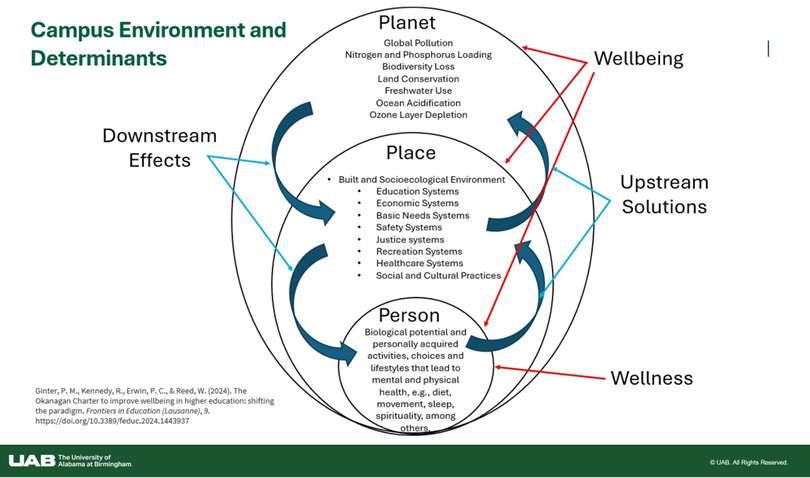
One of the central themes of the webinar was the importance of building African-led solutions while learning from global experience. Keynote speaker Dr Rebecca Kennedy provided an international overview of health-promoting campus frameworks, highlighting the need for systems-based and ecological approaches that recognise the interconnectedness of people, places and the planet.
Presenting the AHPCN vision, Dr Cecil Tafireyi emphasised that the African Health Promoting Framework is being developed specifically for the African higher education context, grounded in regional situation analyses and student surveys. The framework will now enter a validation phase, ensuring it reflects the diversity of institutional realities across the continent.
Addressing urgent challenges: food insecurity and student wellbeing
The panel discussion brought forward powerful, practice-based insights from African universities. Johnson Kinyua, Dean of Students at the University of Nairobi, highlighted food insecurity as a critical and urgent issue affecting student success: “If there is anything we can do towards eliminating hunger on campus by subsidising food, that would be the greatest thing we can do towards promoting health among our students.”

Speakers consistently underlined that hunger, mental health challenges and financial stress directly affect academic performance, reinforcing the need for holistic, campus-wide approaches.
FISU Healthy Campus: a complementary global partner
Representing the International University Sports Federation (FISU), Fernando Parente shared insights from the FISU Healthy Campus Programme, which today engages 213 universities across over 50 countries worldwide. His intervention underlined that the value of global frameworks lies not in imposing models, but in supporting institutions to develop their own context-driven solutions.
“Healthy Campus is not about telling universities what to do,” said Fernando Parente. “It is about providing a flexible framework that helps institutions organise what they already do, identify gaps, measure impact and move forward at their own pace, always respecting local realities.”

Drawing on FISU’s international experience, he highlighted how structured approaches addressing nutrition, mental and social health, sport physical activity, disease prevention, sustainability and governance can help universities create coherence across services, engage students and staff, and align campus actions with broader agendas such as the UN Sustainable Development Goals (SDGs).
Importantly, the discussion confirmed that the African Health Promoting Campuses Network (AHPCN) is not intended to compete with existing global initiatives, but rather to work in partnership and complement them. As Fernando Parente noted, African universities stand to gain from global knowledge exchange while continuing to design locally owned, culturally relevant and resource-sensitive solutions that respond to their specific challenges and opportunities.
“When global and regional initiatives work together, learning flows in both directions,” he added. “That is where real innovation and sustainable impact happen.”
About Health Promoting Campuses Network: Networks — IHPCN
Related News
The 2026 FISU Championship season has kicked off!

Meet five truly inspirational women from the university sports movement

Stellenbosch University makes history with inaugural varsity esport triumph